| Type |
Single seat sea plane |
| Engine |
1 Pratt & Whitney R-1690-T1D1 Hornet |
| Dimensions |
Length 9,44 m , height 3,19 m , span 10,97 m , wing area 31,31 m2 , |
| Weights |
Empty 917 kg , loaded 1558 kg, max. take off weight |
| Performance |
Max.. speed 304 km/h , cruising speed 255 km/h , range 1233 km, endurance , service ceiling , climb 477 m/min. |
| Type |
Werk.Nr |
Registration |
History |
|
1069 |
D-IBAX, TK+HR |
Autumn 1937. E.Stelle (See) Travemünde.Testing by E-stelle Travemünde to determine catapult capability and operational capability on warships |
|
1070 |
D-IXIK |
Used for testing the structure |
|
1074 |
D-ITIX, TK+HS |
Autumn 1937. E.Stelle (See) Travemünde, Testing by E-stelle Travemünde to determine catapult capability and operational capability on warships .E.Stelle Tarnewitz |
|
1071 |
D-IRIN, TK+HT |
Autumn 1937. E.Stelle (See) Travemünde,Testing by E-stelle Travemünde to determine catapult capability and operational capability on warships. FFS (See) 2 |
|
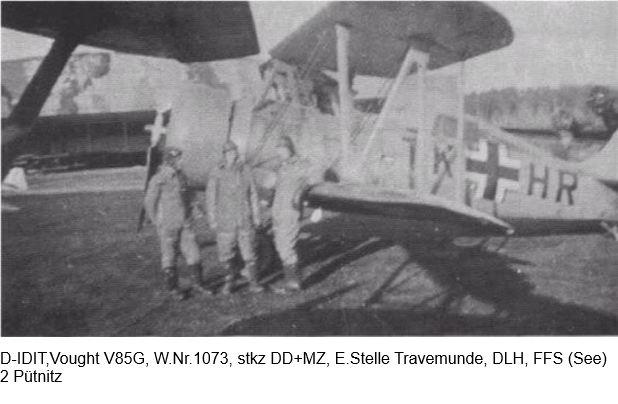
1073 |
D-IDIT, DD+MZ |
E.Stelle Travemünde, DLH FFS (See) 2 Pütnitz |
|
1072 |
D-IGAZ |
E.Stelle Tarnewitz, DVL Berlin-Adlerhof |


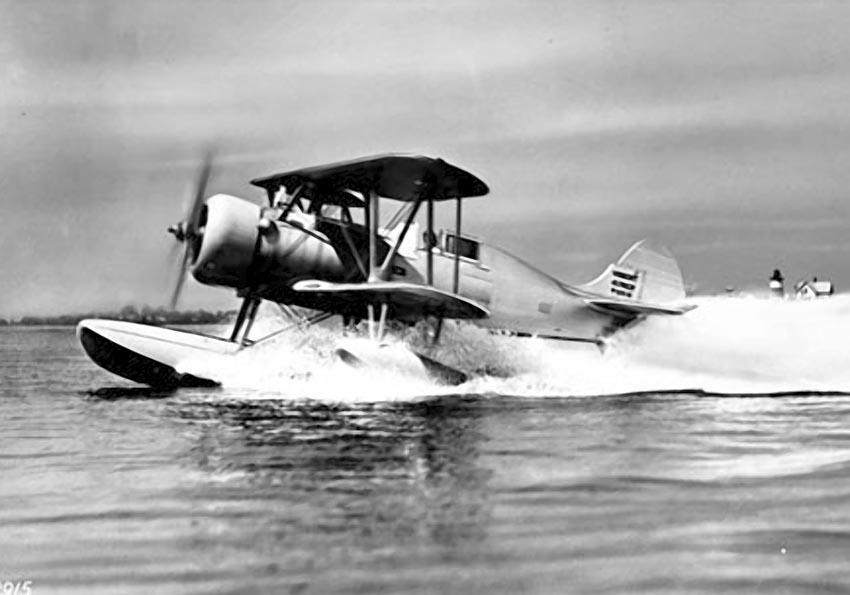
Vought Corsair V-85 G
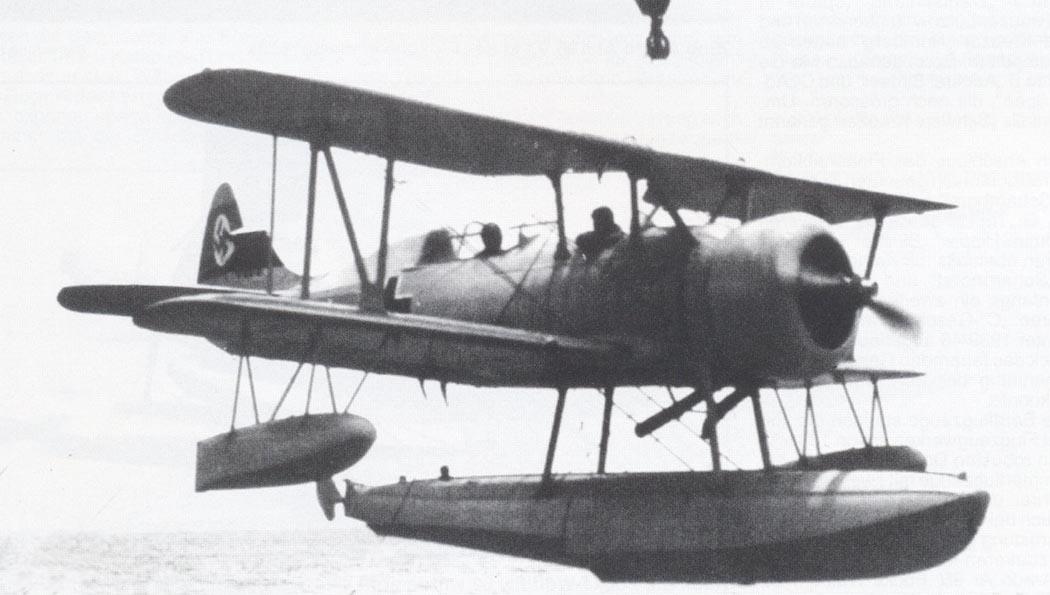
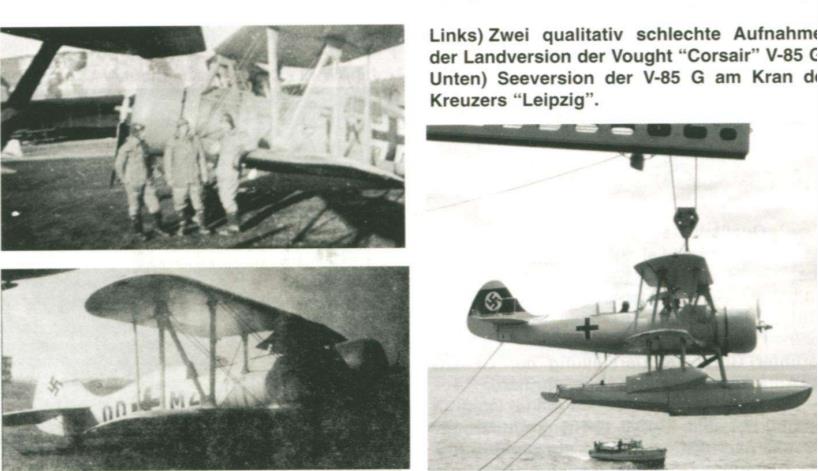
Six aircraft were acquired by the USA in 1936 and officially tested as mail aircraft for Lufthansa. These were both sea and land versions. Border rehearsals were
carried out on the "Leipzig" and the "Admiral Scheer", among others. According to factory information, the machines delivered were five sea versions and one land
version.
However, the identifiers and photos speak a different language. There must have been more than one land version, which can also be proven photographically.


The German government
purchased several aircraft in the USA in 1934 (e.g., 3 Boeing 247 Ds, 1 Douglas DC-2, 3 Vought V-85-Gs), officially listing DLH (Deutsche Lufthansa) as the owner. However, these aircraft primarily served for extensive testing at the testing facilities.
to obtain precise comparative data for the German aircraft of that time.
In 1936, DLH still had a V-85-G "Kurier", D-IDIT (serial number 1073), which arrived at the DLH shipyard in Staaken for repairs on April 20, 1936.
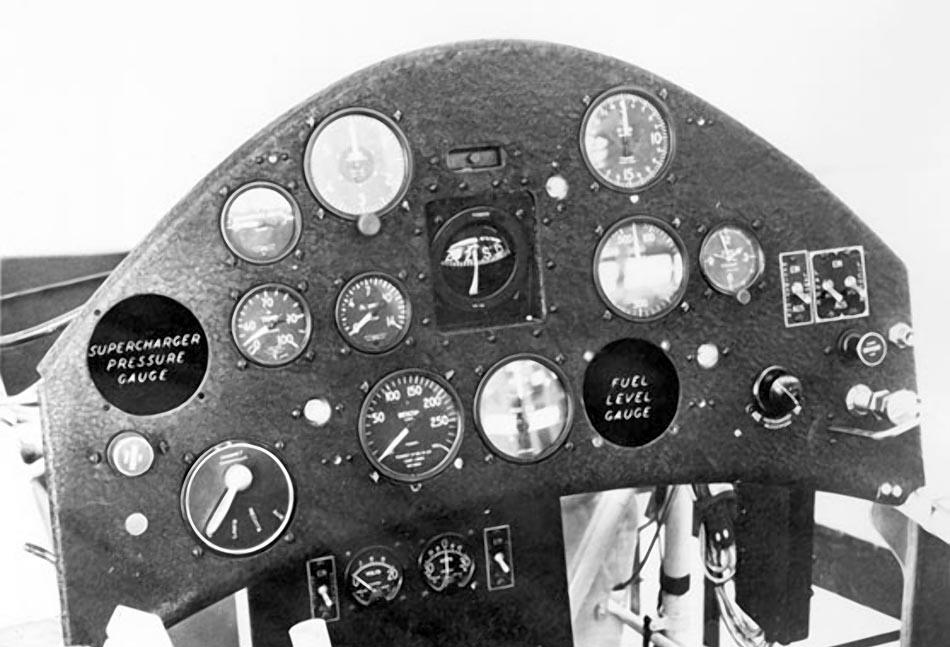
Originally, it was planned to use this type as a mail aircraft on the feeder route between Germany and Lisbon for transatlantic mail service. However, this task was then taken over by the He 70. The pilot's seat, positioned far back, provided a large interior space up to the engine firewall, which was to be converted into a cargo hold. The two fuselage fuel tanks were located between the fuselage frame and the fuselage fairing.
The two other V-85-G aircraft, D-IBAX
(serial number 1069) and D-ITIX (serial number 1074), went to the Travemünde test center immediately after the takeover, where they made a total of 22 launches, for example, between January 21 and February 20, 1935. (Total flight time 5 hours 47 minutes)
One of these aircraft later went to the DVL (German Research Institute for Aviation) in Berlin-Adlershof as an aircraft owner. There, at the beginning of 1938, a DVL standard float with a 130° keel was designed and built for this aircraft.
In the second quarter of 1938, maneuvering tests were carried out with both the original Vought float and the DVL standard float, the results of which were compared with those of the Ar 196 V 3 (central float). it should be noted that a second pilot's seat is installed in the aforementioned "cargo compartment"; the V-85-G was delivered as a single-seater.
Furthermore, the aircraft has the DVL float fitted.