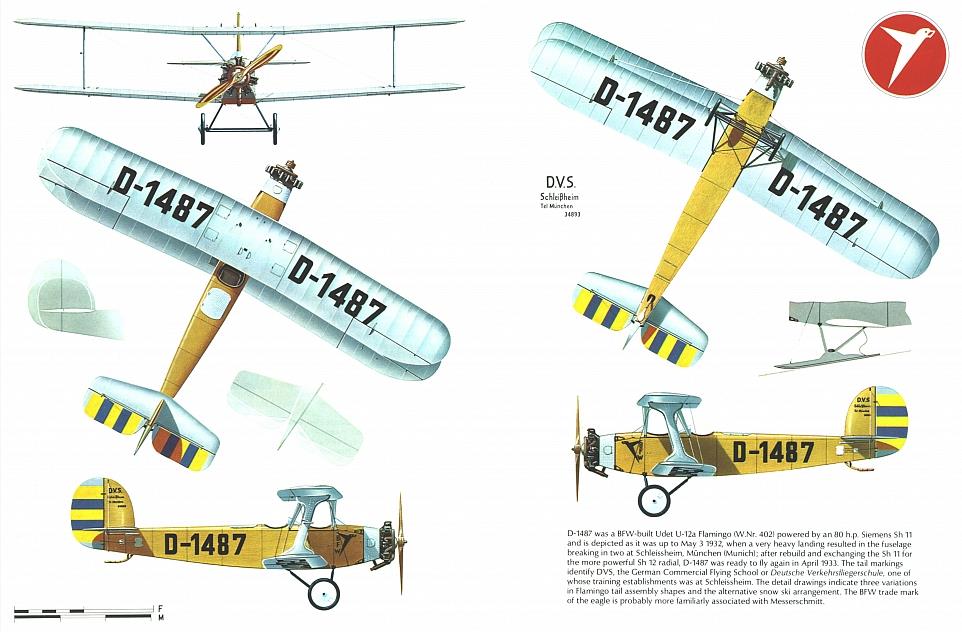
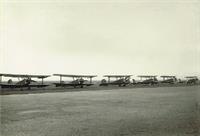
Type Two seat trainer
Engine 1 Sh 11 with propeller Ø 2.36 m 1 Sh 5 1 Sh 12
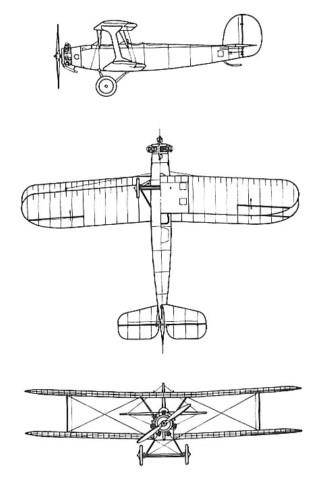
Dimensions Length 7.47 m, height 2.80, span 9.96 m, wingarea 23.97 m2, ailerons 2.48 m2, tailplane 1.80 m2, elevator 1.50 m2, fin 0.70 m2, rudder 1.00 m2, main track 1.60 m, mainplane dihedral 3°, mainplane sweepback 3º
Weights Empty 525 kg, flying weight 800 kg, fuel capacity 96 l, wingload 33,5 kg/m2 Empty 500 kg, flying weight 775 kg, fuel capacity 96 l Empty 550 kg, flying weight 800 kg, fuel capacity 96 l
Performance Max speed 140 km/h, cruising speed 115 km/h, landing speed 75 km/h, climb rate 102 m/min, to 1000 m 7 min. 15 sec., to 3000 m 9 min service ceiling 3350 m Max speed 134 km/h, cruising speed 110 km/h, landing speed 75 km/h, service ceiling 3000 m, range 450 km Max speed 145 km/h, cruising speed 115 km/h, landing speed 75 km/h,  to 1000 m 5 min. 57 sec., service ceiling 3800 m, range 450 km
Company Number built
Udet Flugzeugbau, Ramersdorf 35 +
Bayerische Flugzeugwerke AG 150
Fliegerwerft Thalerhof 20
Central Repair Workshops ,Hungary 40
Manfred Weiss, Hungary 40 
AS. Chr. Backman, Latvia 10 
Aviation Regiment Workshop, Latvia 2
Type
a Basic training with Sh 11 engine
b Aerobatic trainer with an improved wing profile
c Advanced trainer with reduced wing area
d Like b but with Sh 12 engine
e c and d combination
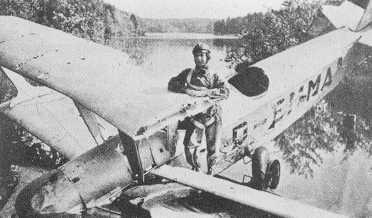
W with floats and Sh 12 engine
H Standard Flamingo H = Holz, austrian designation
S Designed by Hämmerle in Austria S = Stahl, steel tube fuselage
o same as S
Hungaria I Designed in Hungary , development of U-12. 
Hungaria II Designed in Hungary , development of U-12. 
Hungaria III Designed in Hungary , development of U-12. 
Hungaria IV Designed in Hungary , development of U-12. 
Hungaria V Designed in Hungary , development of U-12. 
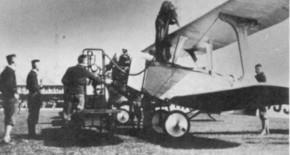
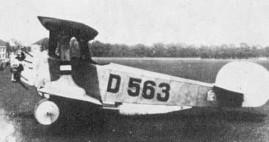
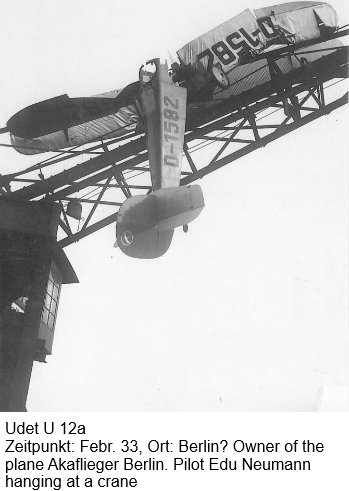
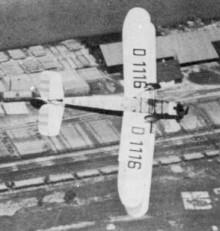
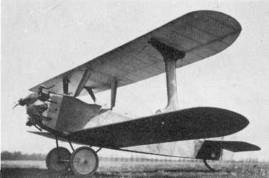
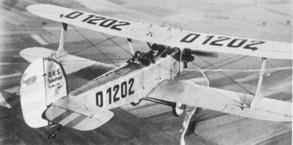
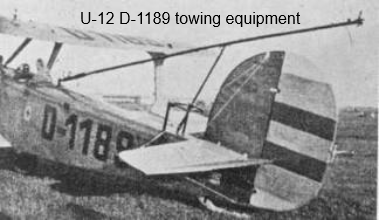
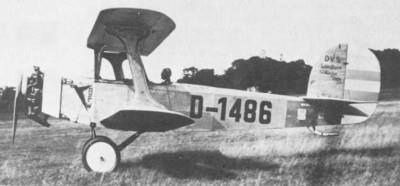
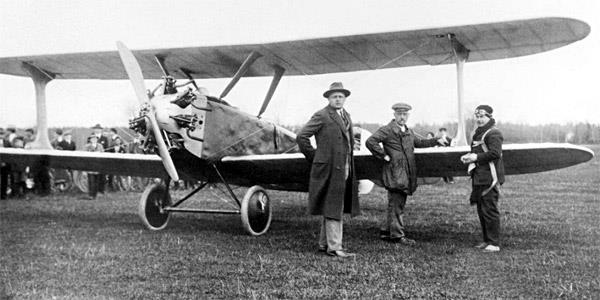
The Udet U 12 Flamingo was an aerobatic sports plane and trainer aircraft developed in Germany in the mid-1920s.
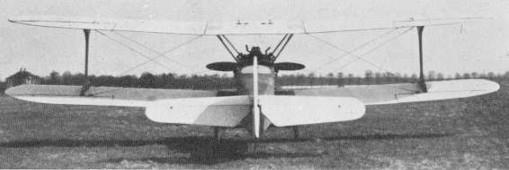
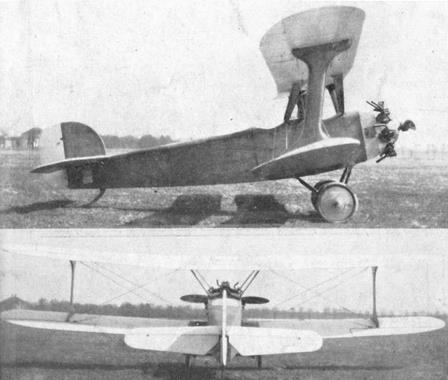
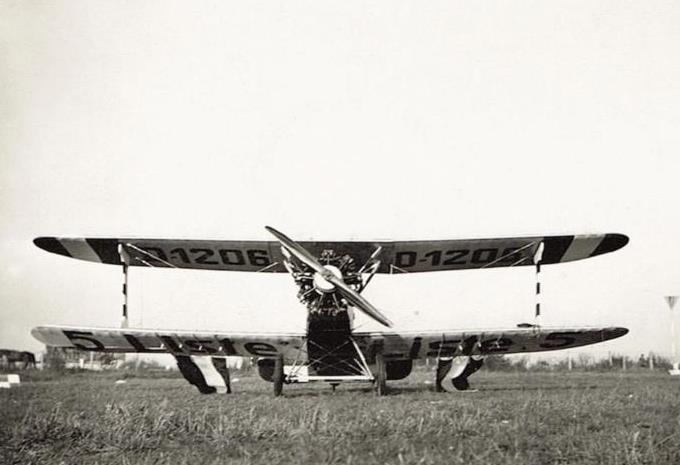
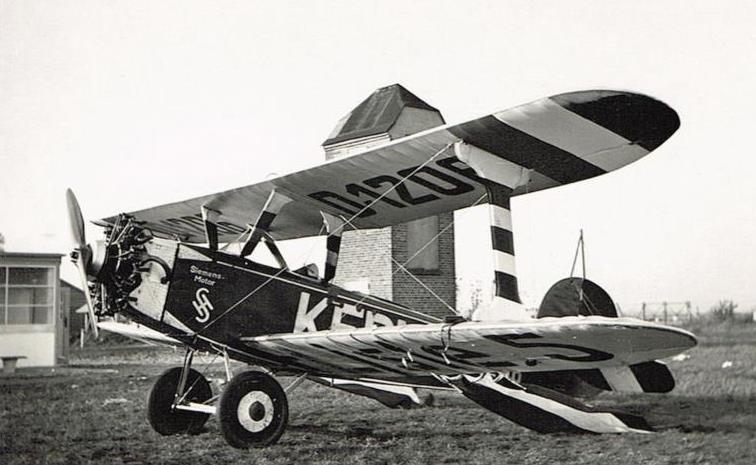
The U 12 was a conventional, single-bay biplane of wooden construction with the wings braced by large I-struts. The pilot and instructor or passenger sat in tandem, open cockpits. The U 12 proved extremely popular and sold well, due in no small part to Ernst Udet's spectacular aerobatics routines while flying the aircraft. One particularly acclaimed part of his act included swooping down towards the airfield and picking up a handkerchief with the tip of one wing.The popularity of this aircraft was insufficient to rescue Udet Flugzeugbau from its dire financial position, but when the company's assets were taken over by the state of Bavaria to form BFW, production of the U 12 soon resumed in earnest. BFW-built U 12s were exported to Austria, Hungary and Latvia, and later built under licence in these countries as well
The first flight of the U 12 “Flamingo” took place on April 7, 1925, in Munich-Schleisheim; just 5 days later, it convinced Ernst Udet in Regensburg with
a daring program the enthusiastic audience of the aerobatic capabilities of the machine.
Udet, the most successful surviving WWI fighter pilot, was in 1922 a co-founder of the company “Udet Flugzeugbau GmbH” (Udet Aircraft Construction Ltd.). Udet lent his illustrious
name, his old acquaintance Heinz Pohl the money, and the designers were Dipl.-Ing. Hans Herrmann and Dipl.-Ing. Erich Scheuermann.
The company's goals were the construction and sale of sport and small transport aircraft; the types u 1 to U 11, all cantilevered low-wing, shoulder-wing, or high-wing, were, however, difficult to market; the potential buyers (e.g., flight instructors, at that time mostly former
war pilots) simply trusted the wire-braced biplanes more!
Then, in 1925, Dipl.-Ing. Herrmann designed a two-seat training and sport aircraft as a biplane, and indeed, it would become one of the best of its time.
The U 12 was constructed of wood, meaning the fuselage and wing frame were made of plywood; the fuselage was planked with plywood, and the surfaces, additionally reinforced with duralumin tubes and steel wires, had a fabric covering.
The engine was mounted on a steel tube frame surrounded by duralumin; this arrangement was also intended to serve as a crumple zone in the event of crash landings.
Also for safety reasons, the two 46-liter fuel tanks were located in the

They also made headlines in another area with forbidden aerobatics. They took it so far that the 40-meter-high bridge over the canal near Holtenau was guarded almost daily by a policeman who issued fines for flying under it. When this became too boring, they tried flying under the bridge with three Flamingos in formation. The pilots involved were Hubricht, Lilienfeld, and Theo Osterkamp, ​​who later became famous as a fighter pilot. A few days after the formation flight, Osterkamp also received a fine of 30 Reichsmarks for a loop around the bridge! The striking red and silver U-12a of Ernst Udet, with the registration number 822, was probably the most legendary. With it, Udet performed breathtaking aerobatic displays both at home and abroad, including the famous "handkerchief trick," in which he picked up a handkerchief lying on the ground with a wire hook attached to the wingtip while in flight.
Furthermore, the U 12 "Flamingo" appeared in many films, such as "Quax, the Crash Pilot," "Storms over Mont Blanc," and "The Miracle of Flying."
The Austrian Flamingos
The first Flamingo registered in Austria was the U 12 of the Tiroler LuftverkehrsGes. m. b. H. (Tyrolean Air Transport Company), which received the registration A-25 and the name "Tirol." It was based in Innsbruck/Reichenau.
The Flamingo, formerly registered in Germany as D-135, was made available to members of the Austrian Armed Forces for test flights by the airfield manager, Eccher, a retired lieutenant colonel. This ultimately led to considerable interest in the U 12 Flamingo.
The establishment of the OeLAG (Austrian Air Transport Company) flight school was intended to make the training of pilots possible for a potential rearmament of Austria.
In 1927, a U-12 Flamingo was purchased from BFW, costing a total of 24,850 Reichsmarks. This A-43 was put into service with the OeLAG in January 1928. After the A-43 was completely destroyed in a crash a few months later, another U-12 was purchased in the autumn, which was registered as an A-55. On April 1, 1929, the OeLAG flying school could finally be founded, and the training of a larger number of pilots could begin than had previously been possible within the framework of the OeLAG. For this purpose, the Flamingo was acquired with the registration A-74. Meanwhile, an agreement was concluded with the BFW (Federal Aviation Office) regarding the licensed production of the U 12 Flamingo in Austria, after which a total of 30 aircraft of this type were permitted to be built – a number that was subsequently not fully utilized.
The Flamingo was manufactured in the Thalerhof technical department, where the first Flamingo built in Austria, registration A-110, rolled out of the hall on May 18, 1931.
Series production of the Flamingo in Thalerhof proceeded very slowly due to a lack of personnel, materials, and money. Furthermore, the company was constantly occupied with repairing damaged aircraft.
The "Steel Flamingo"
Due to the constant breakages of the wooden Flamingo, considerations arose that sought greater stability. The result was the Flamingo with a steel fuselage, developed under the direction of Major Hämmerle. He was supported in this work by a technical advisor from the BFW (Federal Aircraft Research Institute), as this work amounted to a complete redesign. Series production of the "Steel Flamingo," designated u 12 S, only began in 1935. Only 12 aircraft were completed. With the occupation of Austria, some Flamingos were also lost. delivered to the NSFK, where they were reused with new German approval.