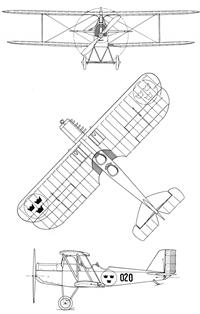
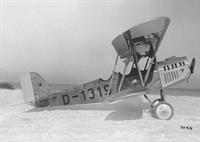
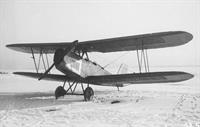
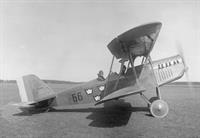
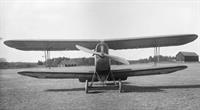
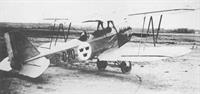
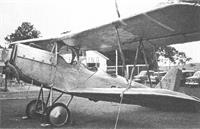
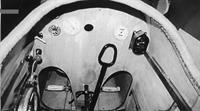
For a long time, the Swedish Air Force was armed with aircraft of the German company Albatros, the main model of which was B.IIa. One of these planes landed in Sweden in 1914, but was destroyed when landing. Nevertheless, it was liked by the Swedes and it was license built unti 1926 as the Sk 1 until 1926 ). To replace it in August 1925, a new training aircraft was purchased - Heinkel HD.35 . The Heinkel HD 35 was a trainer developed in Germany in the 1920s. It was a conventional single-bay biplane with staggered wings of equal span. The design was based on that of the HD 21, and like that aircraft, it had three open cockpits in tandem, although the most forward of these was usually faired over when not in use.
Without waiting for the HD.35 to undergo a full cycle of tests for the suitability of being a training aircraft, the Swedish Air Force hastened to adopt it into service renaming it Sk.5 . As it turned out a little later HD.35 did not meet the requirements presented to it and the decision on further purchase did not follow.
Die HD 35 ist ein einstieliger, verspannter Doppeldecker in Holzbauweise.
Rumpf: Der Rumpf besteht aus vier mit Sperrholz verkleideten Längsholmen, die einen viereckigen Querschnitt mit einer Wölbung auf der Oberseite bilden und in eine senkrechte Heckschneide auslaufen. Das Flugzeug ist mit insgesamt drei Kabinen ausgestattet, doch kann der hinter dem Brandschott befindliche vordere Besatzungsraum abgedeckt und als Gepäckraum genutzt werden, wie es bei dem im schwedischen Luftwaffenmuseum ausgestellten Exemplar der Fall ist (siehe Foto in der Infobox).
Tragwerk: Die Tragflächen bestehen aus einem mit zwei Kastenholmen und Innenverspannung versehenen Holzrahmen. Sie bilden eine leichte V-Stellung, die beim Oberflügel 2° und beim Unterflügel 3° beträgt. Die Unterseite ist zwischen den einzelnen Holmen mit Sperrholz beplankt, der restliche Teil besitzt eine Stoffbespannung. Die Flügelnase ist ebenfalls aus Sperrholz gebildet. Die Flügel sind untereinander mit N-Stielen verbunden und verspannt, wobei der Oberflügel stark nach vorn gestaffelt ist. Der Baldachin wird von zwei umgekehrten V-Streben gebildet. Beide Flächen sind mit durch I-Stangen verbundenen Querrudern ausgerüstet.
Leitwerk: Das Leitwerk ist in Normalbauweise ausgeführt, wobei die Seitenflosse aus einem Holz- und die Höhenflosse aus einem Stahlrohrrahmen gebildet wird. Beide sind mit Stoff bespannt. Das Höhenruder ist ausgeglichen und während des Fluges verstellbar.
Fahrwerk: Die HD 35 besitzt ein starres Hauptfahrwerk mit durchgehender Achse und Gummiseilfederung. Am Heck befindet sich ein Schleifsporn.
| Type |
2-seat trainer |
| Engine |
1 Mercedes D.II |
| Dimensions |
Length 7,40 m, height 3,10 m, span 10,97 m, wing area 32,5 m2 |
| Weights |
Empty 760 kg, loaded 1060 kg |
| Performance |
Max. speed 138 km/h, range 250 km, service ceiling 3300 m, climb 1,8 m/sec. |
| Type |
Werk.Nr |
Registration |
History |
|
235 |
66, 020, SE-SAM |
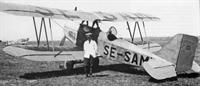
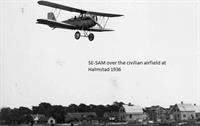
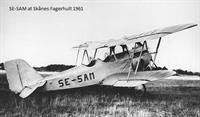
Made in 1925, The aircraft was delivered in August 1925. to the Swedish Air Force.( 66 later 020, designation Sk 5) It was transferred in 1926 to the F5 military flying school in Ljungbyhed where it became a personal airplane used by the pilot Arvid Flory. In the summer of 1929, it was written off and handed over to private hands. With the new registration code SE-SAM. new owner 1931-05-05 C Sparre, Ljungbyhed 1933-12 to G Söderbaum, Djursholm/Äppelviken. Later,
1938-02-27 to P Gustafssson, Ljungby. Registration cancelled 1940-10-15. It is now preserved at the Swedish Air Force Museum |
|
236 |
D-1319 |
In December 1928 registered to T.H. Hannover |









