15
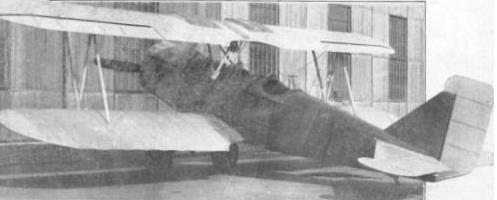
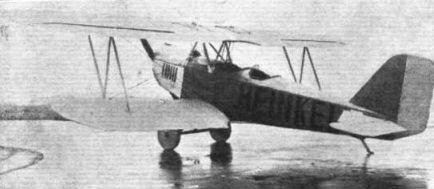
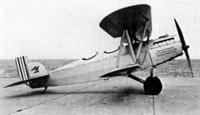
Heinkel "Schulflugzeug Type H.D 21",
Dieser Typ wurde unter der Voraussetzung konstruiert, eine ausgesprochene Spezial-Maschine für die Ausbildung von Land- und Seefliegern zu schaffen. Unter dieser
Berücksichtigung wurde bei der Konstruktion der Maschine ein besonderer Wert darauf gelegt, unter xAmschluß an die modernsten Erfahrungen im Flugzeugbau angenehme Flugeigenschaften zu erreichen, sowie die Maschine auch für Kunstflüge verwenden zu können.
Den Forderungen, die der neuzeitliche Schulbetrieb an derartige Typen stellt, wurde weitgehendst Rechnung getragen. - Der "Gesamtaufbau des Flugzeuges ist in allen
seinen Teilen klar und einfach gehalten, ferner ist auf die Betriebssicherheit großer Wert gelegt, welches sich ganz besonders bei der Motoranlage zeigt.
Das Flugzeug ist als einstieliger Doppeldecker mit gestaffelten Tragdecks ausgeführt und besitzt in jeder Flächen-Hälfte nur ein Trag-und Gegenkabel, die in einer Ebene
angeordnet sind.
Zur Herabminderung der gegenseitigen Beeinflussung der beiden Tragdecks ist deren Abstand besonders groß gewählt. Durch diesen weiten Tragdeckabstand, sowie durch die starke Staffelung wird ferner ein besonders günstiger Gesichtswinkel für die beiden Insassen erzielt.
Der Rumpf ist eine Konstruktion aus vier längsgehenden Holzhol-men mit Holzspanten und ist außen mit Sperrplatten ganz beplankt.
Die beiden Sitze sind hintereinander angeordnet und liegen hinter den Spannturmstreben, so daß bei einem evtl. Ueberschlag die beiden Insassen nicht vom Spannturm
eingeklemmt werden können; ferner ermöglicht diese Sitzanordnung einen äußerst bequemen Einstieg. Im vorderen Rumpfteil unter dem Spannturm ist ein Raum für Gepäck vorhanden, in welchem sich ein Notsitz befindet, der für eine dritte Person verwandt werden kann.
Soll das Flugzeug nicht zum Schulen verwendet werden, so ist die vordere Schülersteuerung leicht auszubauen. - Um eine bessere Verständigung zwischen Lehrer und
Schüler zu ermöglichen, ist der Rumpfspant zwischen den beiden Sitzen mit einer Oeffnung versehen. Beide Sitze sind verstellbar angeordnet.
Der Rumpf ist gegen den Motor durch ein durchgehendes Metallbrandschott abgeschlossen. Die vier Rumpfholme reichen bis zu diesem Brandschott und tragen an ihren
Endpunkten Beschläge, an die das Motorfundament angeschlossen ist.
Der Motor ist auf einem Stahlrohrfundament gelagert, welches mit 4 Bolzen an entsprechende Beschläge der Rumpfholme angeschlossen ist, ein Prinzip, welches sich bei
unseren Konstruktionen wiederholt bewährt hat und fast ausschließlich angewandt wird. Das Motorfundament trägt gleichzeitig die Kühleranlage sowie die sonstigen zum
Motor gehörigen Aggregate. Man kann infolgedessen die ganze Motoranlage in kürzester Zeit ausbauen und durch eine neue ersetzen. Außerdem kann die komplette
Motoranlage auf den Prüfstand gesetzt werden und somit ist die Möglichkeit gegeben, die komplette Motoranlage vor dem Einbau einer eingehenden Prüfung zu unterziehen.
Zur Einsichtnahme in die Motoranlage ist die Motorhaube aufklappbar eingerichtet.
Ober- und Untertragdeck sind geteilt ausgeführt. Die Holme sind Doppel-T-Träger aus amerikanischem Spruce.
Alle 4 Tragdeck-hälften haben durchgehend ein Normal-Profil. Dieses bewirkt eine bedeutende Ersparnis in der Fabrikation sowie einfache und billige Reparaturmöglichkeit.
Die Staffelung der beiden Tragdecks ist so gewählt, daß Hinterholm des Obertragdecks über Vorderholm des Untertragdecks zu liegen kommt. Die dadurch entstehende
Ebene ist durch 2 Kabel ausgekreuzt. Diese Anordnung hat den Vorteil nur zweier Kabel und in Verbindung mit dem N-Stiel gibt diese Anordnung eine vollkommen statisch
bestimmte Zelle.
Die Tragflächen sind derart gebaut, daß an Stelle einer Innenver-spannung Vorder- und Hinterholm auf der Unterseite durch Fournier-Platten zur Aufnahme der
Schubbeanspruchungen verbunden sind, hierdurch wird eine leichtere Bauart und vereinfachte Reparaturmöglichkeit erreicht.
Der Brennstoff ist in zwei leicht ausbaubaren Fallbehältern im oberen Tragdeck untergebracht. Die Benzinuhren befinden sich gut sichtbar auf Unterseite Obertragdeck.
Das Fahrgestell ist als geteilte Achse mit Gummizügen ausgeführt. Dadurch, daß jede Achshälfte unabhängig von der anderen um den mittleren Drehpunkt schwingen kann,
wird ein Anpassen an die Bo-denunebenheiten bewirkt, die ein sicheres Steigen und Landen ermöglichen. Auswechslung von Land- gegen Schwimmergestell ist
vorgesehen.
Die Demontage des Tragdecks geschieht nur durch Lösen eines beiderseits befindlichen Spannschlosses am Gegenkabel, nach dessen Lösung der N-Stiel unter das Oberdeck geklappt werden kann, und beide Tragdeckhälften durch eine Drehung nach unten ausgehakt werden.
Die Startlänge der Maschine ist normal und beträgt bei Windstille ca. 60-80 m. Die Steiggeschwindigkeit ist sehr gut. Die Wendigkeit der Maschine ist ebenfalls gut; das
Flugzeug liegt fest in der Kurve und hat keine Neigung zum Trudeln. Mit der Maschine lassen sich sämtliche Kunstflüge leicht ausführen.
Zum Einbau gelangt normalerweise der 120 oder 100 PS-Motor; es kann jedoch auch ein entsprechend anderer Motor zwischen 100 und 150 PS zum Einbau gelangen.
Das Flugzeug ist beim Einbau des 120 PS Mercedes mit Brennstoff für ca. 4 Vollgasstunden versehen.
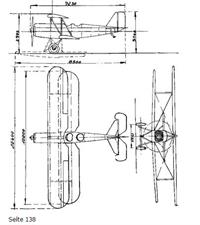
Die Hauptdaten des Flugzeuges sind beim Einbau des 120 PS Mercedes wie folgt: Spannweite 10,00 m, Gesamtlänge 7,25 m, Gesamthöhe 2,95 m, Leergewicht 710 kg,
Zuladung 270 kg, Vollast 980 kg, Geschwindigkeit im Horizontalflug 145 km/Std., Steigfähigkeit 1000 m in 5 Min., 2000 m in 1,13 Min., 3000 m in 1,28 Min., Aktionsradius ca. 570 km.
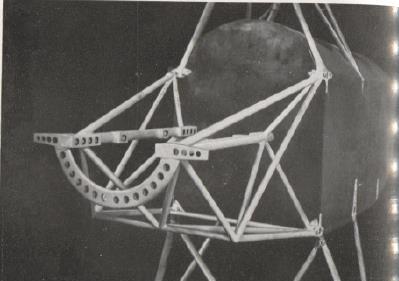
| Type |
2-3 seat trainer |
| Engine |
HD 21 Daimler-Mercedes D I |
HD 21a Daimler-Mercedes D II |
| Dimensions |
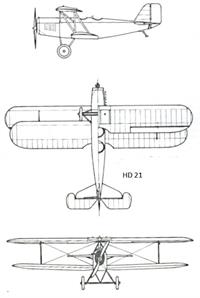
Length 7,35 m, height 3,05 m, span 10,6 m, wing area 27,8 m2 |
| Weights |
Empty 680 kg, flying weight 980 kg |
Empty 710 kg, flying weight 980 kg |
| Performance |
Max.speed at sea level 135 km/h, climb to 1000 m 6 min., to 2000 m 13,5 min., cruising speed 115 km/h, landing speed 73 km/h |
Max.speed at sea level 135 km/h, climb to 1000 m 5 min., to 2000 m 13 min., cruising speed 120 km/h, landing speed 73 km/h, range 570 km, service ceiling 4000 m |
| Type |
Werk.Nr |
Registration |
History |
|
218 |
D-499 |
To DVL 1925. Scrapped Oct. 1929 |
|
219 |
D-540, D-EDUM |
From 1925 - 1933 to AkaFlieg Darmstadt, from autumn 1933 to DLV Flieger-Ortsgruppe Darmstadt |
|
220 |
D-510, D-680 |
Built 1924. In May 1925 new registration D-680 for the Deutsche Rundflug . Delivered to Sportflug Oct. 1925., to DVS 1927. Crashed May 1929 |
|
1 |
D-686 |
Built by Arado. 1925 to Stettiner Sportflug GmbH, to Deutsche Luftfahr GmbH 1927. to G. Friedrich, Königsberg, to Albertus-Universität at Königsberg Sept. 1932 |
|
2 |
D-685 |
Built by Arado. 1925 to Stettiner Sportflug GmbH, to Deutsche Luftfahr GmbH 1927 |
|
3 |
D-691 |
Built by Arado. 1925 to Stettiner Sportflug GmbH. Crashed 4/7 1925 |
|
4 |
D-676 |
Built by Arado. Delivered to Süddeutsche Sportflug, Böblingen, to Deutsche Luftfahrt GmbH 1927. Out of service April 1932 |
|
5 |
D-722 |
Built by Arado. Delivered to Sportflug 1925 ,to Deutsche Luftfahrt GmbH 1927. Crashed Febr. 1932 |
|
6 |
|
Delivered to Lipezk 1929 |
|
7 |
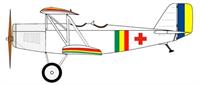
D-677, SE-ACY |
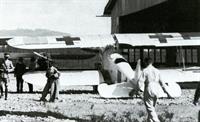
Built by Arado 1925.To DVL Sept. 1926 , to Albatros-Flugzeugwerke April 1928. To Sweden 21 Sept. 1931. To Anders Wenzer, Stockholm, to Count C.G. von Rosen, Gothenburg. Used for airshows.-Damaged in a landing 1/4 1935. Repaired. To Ethiopia 14 Dec. 1935 |
|
8 |
D-732 |
Built by Arado. Delivered to Sportflug 1925 ,to Deutsche Luftfahrt GmbH 1927. To H.Janssen, Ludenscheid. Crashed in Aug. 1932 |
|
9 |
D-762, PP-TAV |
Built by Arado. Delivered to Sportflug 1925 ,to Deutsche Luftfahrt GmbH 1927. Sold to Brazil July 1931 |
|
10 |
D-897 |
Built by Arado. to Deutsche Luftfahrt GmbH 1927., tp Albatros-Flugzeugwerke GmbH April 1928. Crashed April 1930 |
|
11 |
|
|
|
12 |
|
|
|
13 |
|
|
|
14 |
|
|
|
15 |
|
|











