Im Flugboot um die Welt
Ein Flug um die Welt ist in unseren Tagen nichts Autregendes mehr. Anders vor 50 Jahren.
als Wolfgang von Gronau ein dcrartlges Untcmchmen mit einem Flugboot vevsuchte.
Qronau hatte schon In den Jahren 1930 und 1931 die nordliche Atlantik-Route bis New Yofk
und Chicago bewattlgt und dabcl Ertahrungcn gcsammcli. Eln Jahr spater startete er mit
setner Besatzung von der Verkehrstliegerschule in List aut Sytt zu einem vier Monate
dauernden Flug rund um die Welt.
Luftfahrt international 7-8 82
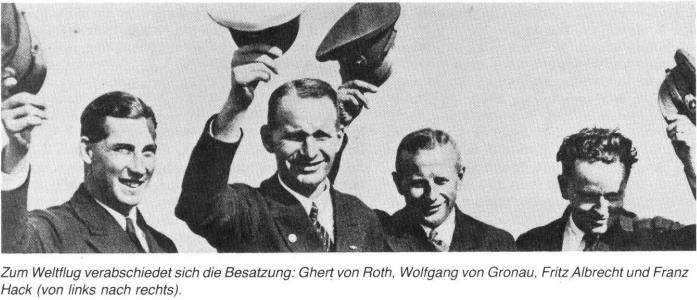
Am 22. Juli 1932 startete Gronau mit Copilot
Ghert von Roth, funker Fritz Albrecht und
Bordmonteur Franz Hack auf dem Dornier Wal
D-2053, den er schon im Vorjahr bei seinem
Flug uber Grönland und die Hudson-Bai nach
Chicago benutzt hatte. Dieser »Grönland-Wal«,
ein Unikat mit der Musterbezeichnung Do-Jllb
Bos, hatte den stärkeren BMW Vila (2x750
PS), ein auf 9,21 erhöhtes Fluggewicht und war
schon mit einem kunstlichen Sperry-Horizont
ausgerustet sowie mit einer leistungsfähigen
FT-Anlage fur Mittel- und Kurzwellen, einem
Peilempfänger und einem Notsender mit zer-
legbarem Antennenmast, der während des Flu-
ges noch eine besondere Rolle spielen sollte.
Neben den schwierigen organisatorischen Vor-
bereitungen bestand das eigentliche Problem
des Weltfluges in der Uberquerung des nord-
amerikanischen Kontinents mit einem Flugboot
von der Ost- zur Westkuste. Jede Notlandung
»auf Land« muf3te hier das Ende der Reise
bedeuten.
Zehn Stunden nach dem Start in List setzte das
Flugboot im isländischen Seydis-Fjord auf. Die
zweite Etappe fiihrte zur Sudspitze Grönlands.
Cartwright auf Labrador und weitere zehn Stun-
den später Montreal waren die nächsten Statio-
nen. Beim Weitertlug nach Chicago mu(3te der
Wal aber mit Wasserrohrbruch und drei Kolben-
fressern auf dem Michigansee notwassern. So-
fort wurde wegen der Ersatzteile nach Deutsch-
land gekabelt, die mit dem Schnelldampfer
»Bremen« und per Luftfracht an die Westkuste
vorausgeschickt werden sollten. Die notwendi-
gen Reparaturen muBten mit Bordmitteln
durchgefuhrt werden, wobei die mitgefiihrten
Ersatzkolben eingebaut wurden. Danach ging
es nach Detroit, Chicago, Milwaukee und Min-
neapolis, wo den deutschen Fliegern uberall
iiberschäumende Empfänge bereitet wurden.
Um möglichst nahe am Wasser zu bleiben,
fuhrte die Route nun nordwestlich uber Kanada,
denn die dortigen Seen, die sich wie auf eine
Schnur gezogene Perlen aneinanderreihen, bo-
ten auf dem grö Bten Teil der Strecke gute
Landegelegenheit. So näherte sich die D-2053
dem schwierigsten Stuck, der Uberquerung der
Rocky Mountains. Begunstigt durch gutes Wet-
ter wurde diese Strecke in knapp acht Stunden
zuruckgelegt, ohne daf3 es Zwischenfälle gab.
Die Motoren liefen wie ein Uhrwerk.
So erreichten sie Prince Rupert, an der Westku-
ste Kanadas. Da der Wal aber nur eine Reich-
weite von 2200 km hatte, konnte Gronau Japan
nicht direkt uber den Pazifik erreichen, sondern
muBte den Weg uber Alaska und die Inselgrup-
pen der Aléuten und Kurilen nehmen. Als gro-
f3er Nachteil erwies sich hier das sehr unbe-
ständige Wetter. Die warme, feuchte Luft des
Stillen Ozeans stö f3t bei den vorherrschenden
Westwinden gegen die Felsenkuste, wird hoch-
gedriickt und kondensiert durch die Abkuhlung
zu Dunst, Nebel oder Regen. Bei den Aléuten
ist es noch schlimmer. Dort trifft das warme
Wasser des Pazifiks mit dem kalten Wasser der
Beringsee zusammen, und die Bewohner rech-
nen mit zwei Tagen im Monat, an denen die
Sonne sichtbar ist.
Am 22. August startete der »Grönland-Wal« in
Prince Rupert zum Flug entlang der Kuste nach
Norden. Uberwiegend im Blindflug und nur
nach Zwischenlandung, zu der ein Kuhlerscha-
den zwang, konnte Cordova, die Absprungba-
sis in Alaska, erreicht werden. Am 25. August
verlieB der Wal dann den amerikanischen Kon-
tinent zum »lnsel-Springen« nach Japan und
landete nach zehnstundigem Blindflug auf den
Aléuten. Am 2. September wurde die nördlich-
ste Kurilen-lnsel erreicht, und am 4. September
wasserte der Wal bei Tokio. Hier, auf dem
Scheitelpunkt des Weltfluges, wurde das Flug-
boot mit Hilfe von Kawasaki, dem Lizenzneh-
mer von Dornier und BMW, uberholt und mit
Zusatzkuhlern fur die Tropen ausgerustet.
Am 17. September konnte der Weiterflug ange-
treten werden, der uber Schanghai und Hong-
kong, dann - mit einem Abstecher uber die
Philippinen, Borneo, Java und Sumatra - nach
Hinterindien fuhrte. Dabei kam es auf der Etap-
pe von Mergui nach Rangoon zum schwersten
Zwischenfall während des Flugos: Uber dem
Golf von Martaban begann der vordere Motor
zu kochen, weil die Kuhlwasserpumpe gebro-
chen war. Der Wal muBte notwassern und ei-
nen Taifun abreiten. In dieser kritischen Lage
gelang es dank der ausgezeichneten Funkaus-
rustung, den englischen Dampfer »Caragola«
herbeizurufen, der den Wal nach Rangoon
schleppte. Dort muBte ein neues Pumpenrad
gegossen werden.
Dann ging es entlang der indischen Kuste uber
Ceylon nach Bombay und Karachi. Uber dem
Persischen Golf konnte zum ersten Mal Funk-
kontakt mit der Heimat aufgenommen werden.
Von Bagdad ging der Flug uber 700 km entlang
des wasserarmen Euphrat und dann noch 200
km uber die syrische Wuste, ehe endlich das
Mittelmeer auftauchte.
Von Zypern uber Athen und Rom kamen sie
dann bis Genua. Hier war das Wetter so
schlecht, daB an ein Uberfliegen der Alpen nicht
zu donken war. Erst zwci Tage spatcr wurden
die Alpengipfel frei, so daB sie sich sofort zum
Start entschlossen. Da erreichte sie ein Funk-
spruch, daB der offizielle Empfang erst auf den
nächsten Tag festgesetzt sei. So landeten sie
still und heimlich am 9. November nachmittags
in Altenrhein am Bodensee und flogen am fol-
genden Tag nach Friedrichshafen, wo sie be-
geistert empfangen wurden.
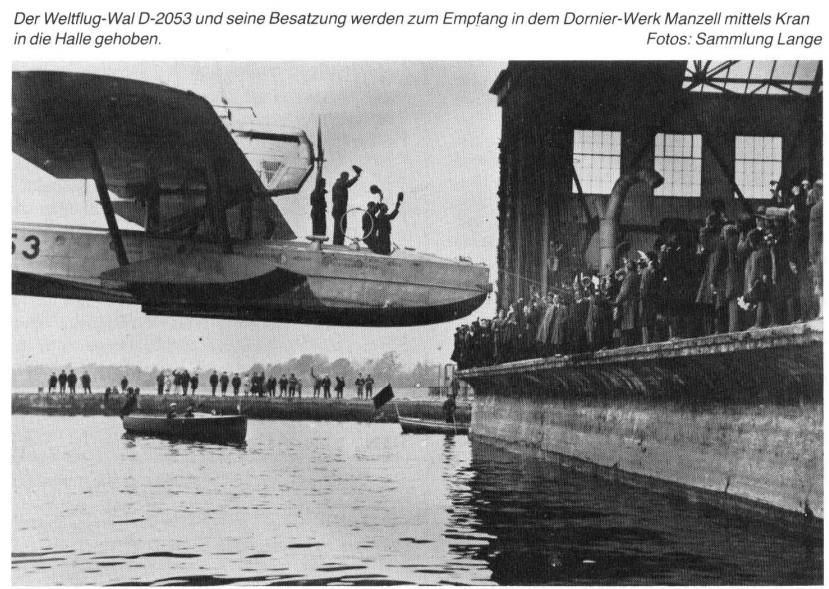
Mit der Ruckkehr des »Grönland-Wal« zu sei-
ner Geburtsstätte, den Dornier-Werken, war
der aufsehenerregende Weltflug beendet.
44000 km waren in 112 Tagen auf 50 Etappen
zuruckgelegt worden. In jenen Tagen der
schweren wirtschaftlichen Nöte und innenpoliti-
schen Auseinandersetzungen hatte ein deut-
sches Flugzeug weltweit Flagge gezeigt und
bewiesen, daB der weltumspannende Luftver-
kehr in greifbare Nähe geruckt war.
Jiirgen Lange







