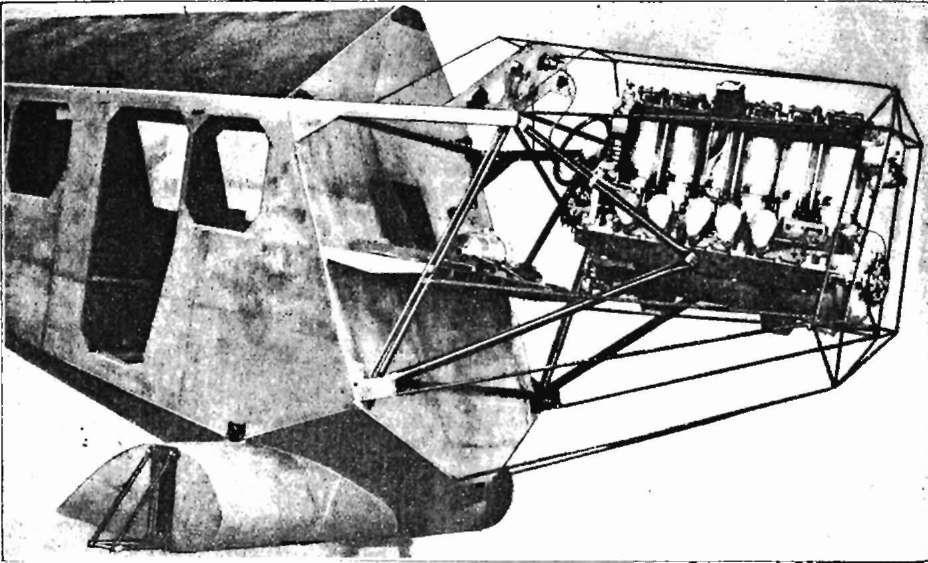
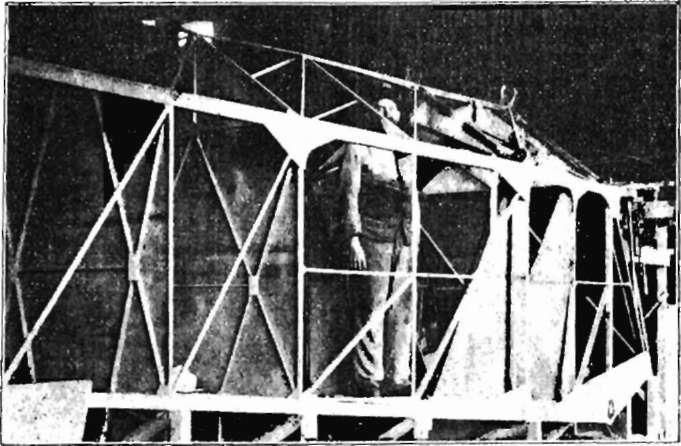
The plane was an enlarged model of the CLE II with a wing mounted higher than the CLE II. In front of the wing was an open cockpit for the pilot. Under and behind the wing was a cabin for eight passengers. Landinggear was designed with a transverse shaft mounted tight against the fuselage , with two large wheels on side off uselage. The rear fuselage was supported with a tail skid mounted under the fin. A Daimler D IV engine with a two-bladed propeller which drives an tobladbærende propeller , later replaced with a Maybach Mb IVa.
| Type |
1 + 8 seat airliner |
| Engine |
1 Daimler D IVb |
1 Maybach Mb IVa |
| Dimensions |
Length 11.25 m, height 3.50 m, span 20.00 m, wing area 53.40 m2 |
| Weights |
Empty , loaded , max. take off weight |
Empty 1750 kg, fuel 225 kg, oil 22 kg, crew 80 kg, payload 773 kg, flying
weight 2850 kg |
| Performance |
Max.. speed , cruising speed , range , endurance , service ceiling , climb |
Max. speed at sea level 160 km/h, cruising speed at sea level 145 km/h, climb 1.85 m/sec., service ceiling 4000 m, endurance 4.3 h, landing speed 80 km/h |
| Type |
Werk.Nr |
Registration |
History |
|
|
|
Built in 1923. Took part in the International Air Exhibition in Gothenburg (Sweden) in July 1923. Only static. |
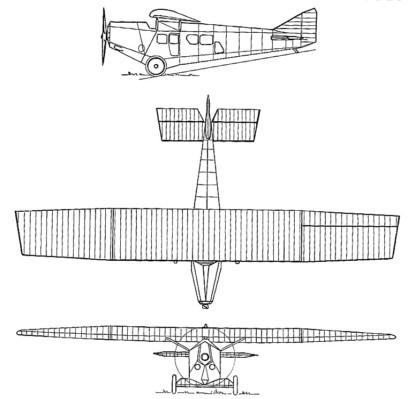
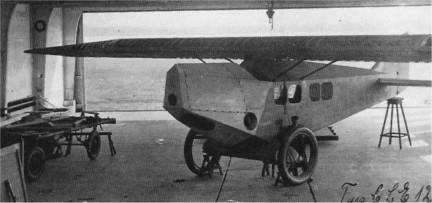
Caspar-Verkehrsflugzeug Typ CLE 12.
Der moderne Luftverkehr stellt hohe Anforderungen an die Wirtschaftlichkeit eines Verkehrsflugzeuges. Unter Wirtschaftlichkeit in diesem Sinne ist zu verstehen, daß
ein Flugzeug mit möglichst geringer PS-Zahl eine große Last über eine weite Strecke mit möglichst hoher Geschwindigkeit befördert. Das moderne Verkehrsflugzeug soll
in konstruktiver Beziehung einfach und übersichtlich gehalten sein, um auch von Hilfskräften behandelt zu werden, die auf diesem Gebiete noch nicht genügend
Erfahrungen besitzen. Der ganze Aufbau sei daher zweckmäßig und doch vorteilhaft angeordnet. Die gesamte Motoranlage soll leicht demontierbar, sowie zugänglich
eingerichtet sein, um in kürzester Zeit etwa notwendig werdende Reparaturen zu ermöglichen. Die Anordnung des Passagierraumes ist derart zu wählen, daß
irgendwelche Gewichts Verschiebungen keine merklichen Nachteile auf den Momenten-Ausgleich des Flugzeuges ausüben. Die gesamte Anordnung aller technischen
Einzelheiten soll größte Zuverlässigkeit und Betriebssicherheit gewährleisten.
Das neue Caspar-Verkehrsflugzeug, dessen Konstrukteur 1 »iplorii-Ingenieur E. von LÖßl ist, wurde unter Berücksichtigung vorstehend geforderter Eigenschaften
konstruiert. Zur Erzielung eines für Führer und Passagiere gleich guten Gesichtsfeldes wird dieser Typ als Hochdecker gehallt. Bei dieser Bauart wird durch die günstige Schwcr-puukllage eine außerordentlich
hohe statische Längs- und SeitenstabiIi-tat erzielt. Die Erfahrungen der neuesten aerodynamischen Forschungen sind hei der Fornibildung durch Vermeidung sämtlicher
außen-liegender, nicht tragender Teile in weitgehendstem Maße berücksichtigt worden. Daher ist der Stirnwiderstaud auf ein Minimum gebracht und kommt durch
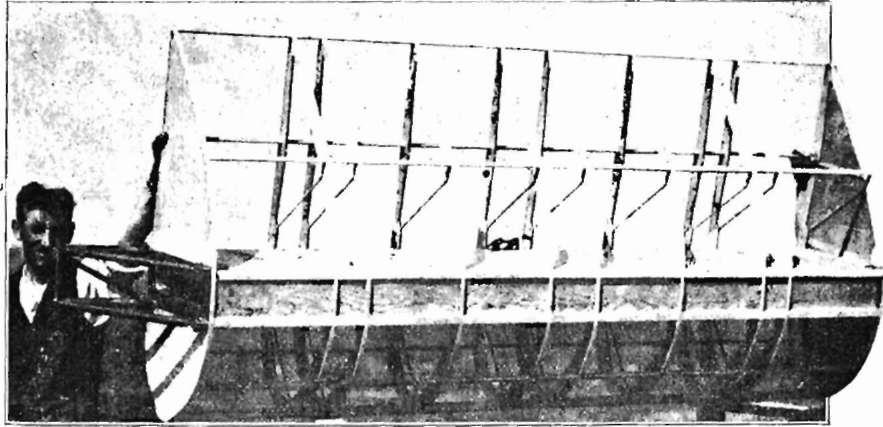
völlige Ausnutzung der motorischen Kraft der Leistungsfähigkeit zugute. Das ganz mit Sperrholz beplankte Tragdeck wird durch Bald ach iu streben mit dem Rumpf
verbunden. Das Tragdeck hat ferner ein äußerst günstiges SeiteuVerhältnis. Die Spannweite beträgt 20 m. Zur Vereinfachung der Montage und Demontage und um die
Maschine in kleineren Hallen unterbringen zu können, wird der Flügel als geteilter Flügel mit sogenannten „Steckflügeln" ausgeführt. Die Fläche besteht aus einem
Mittelstück von 10 m Spannweite, welches zwecks Vereinfachung der Fabrikation ein durchgehendes Rippenprofil besitzt, sowie aus einem beiderseitig angeschlosseneu
Steckflügel von je 5 in Länge, der an der Trennfuge Querruder vermittels eines am Vorder- und Hinterholm befindlichen Schncllverschlusses gehalten wird. Der Caspar-
Paten tschnellversehluß bestellt aus zwei an den Höhnenden befindlichen Uinfassiingsblechen mit oberer und unterer Keilnut, die durch Ineinanderschieben zur Deckung
gebracht werden. Die Verbindung erfolgt durch zwei Keilstücke, die auf einem Bolzen gelagert sind und durch eine Spiralfeder in die Keilnut gedrückt werden. Die
Sicherung geschieht durch eine Flügelmutter . Alle kräfte werden
nur durch den Stahlkeil und nicht etwa durch den HYPERLINK "http://Hol7.cn"Holzen aufgenommen. Diese Konstruktion ist infolge ihrer Einfachheit und überaus großen Sicherheit als vorbildlich
zu betrachten. Die Montage eines Steckflügeis laßt sich in der kurzen Zeit von zirka 15 Sek. bewerkstelligen. Die Verwindungskabel sind durch eine neben der
Trennfuge Querruder liegende Klappe leicht zugänglich und werden bei Demontage der Steckflügel durch einen einfachen Sliphaken gelöst. Durch doppelte Querruder
und verstellbare Höhendämpfuiigsflache, die beide durch gesonderte, selbst sperrende Handräder im Eührerrauin betätigt werden, ist eine Quer- und
Längstrimmvorriehtung geschaffen worden. Der Flügel ist durchgehend freitragend gebaut und trägt in der Mitte am Vorder- und Hinterholm befestigt ein Fachwerk aus
Stahlrohr, an welchem der Rumpf aufgehängt ist. Die ganze Fluglast, d. i. Motor,
Betriebsstoff und Insassen, ist auf eine Brücke in Stahl- und Puralnmiu-konstruktion gelauert, welche wiederum vermittels eines statisch bestimmbaren, der Berechnung
zugänglichen Stahl rohrfach Werkes ain Flügel aufgehängt ist. Auf Grund dieser Konstruktion werden alle großen Beanspruchungen nur durch Metall geleitet, während die
Ilolz-konstruktion lediglich als Träger der Beplankungen und Verkleidungen, sowie zur Uebertragung nur untergeordneter oder nur zeitweise auftretender
Beanspruchungen dient. Das Leitwerk ist zwecks Verringerung des eigenen WiBerstandes freitragend ausgebildet. Der Passagierraum befindet sich unter dem Tragdeck
und ist derart groß gehalten, daß ein aufrechtes Gehen bequem ermöglicht wird. Die beiderseitig augebrachten Einsteigtüren befinden sich zirka 75 cm über dem
Erdboden. Der Passagierraiini bietet 8 Fahrgästen bequem Platz. Die Innenausstattung ist in jeder Beziehung als luxuriös zu betrachten. Kabine 1. und 2. Klasse,
elektrische Deckenbeleuchtung, Warmluftheizung, sowie ein W. C erhöhen den Komfort. Große Fenster aus splitterfreiem Triplexglas ermöglichen sehr gute Sicht. Der
Führcr-rauni ist vor dem Tragdeck angeordnet. Das Fahrgestell befindet sich zwecks Verringerung des Luftwiderstandes in einer profilierten Verkleidung, die
gleichzeitig tragend wirkt. Neben dem Führer befindet sich ein zweiter Platz, der für den begleitenden Monteur oder als Notsitz vorgesehen ist. Hinter der
Passagierkabine liegt der leicht zugängliche Gepäckraum.
Zum Antrieb dient ein 260 PS Maybach- oder 360 PS Rolls-Royce-Motor. Der Motor ist auf einem Stahlchassis gelagert, das verstellbar eingerichtet ist, um für den
Einbau beider Motoren geeignet zu sein. Das durch zwei Brücken abgesteifte Motorenchassis wird durch eine au zwei Punkten beiderseitig augreifende
Stahlrohrkonstruktion gehalten. Motorverkleidung und Kühlcrlagcruug ruhen ebenfalls auf einer Stahlrohrkonstruktion.
Die Hauptdaten für das Caspar-ü roß Verkehrsflugzeug Typ CLE 12 sind folgende: Länge über alles: 11 250 in, größte Spannweite: 20 m, größte Höhe: 3.5 in. Motor
260 PS Maybach, 360 PS Rolls-Royce, Leergewicht: 1750 kg, Geschwindigkeit: 160 km pro Std., Steigfähigkeit: 1000 in in 9 Min., Gipfelhöhe: 4000m.