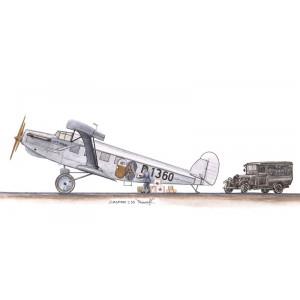
| Type |
2 + 8 seat airliner |
c freight carrier |
projected sea plane version |
| Engine |
1 BMW VIU with a 4-bladed wooden propeller |
| Dimensions |
Length 13.24 m, height 4.78 m, span 16.72 m, wing area 69.0 m2 |
| Weights |
Empty 2400 kg, load 2200 kg, flying weight 4600 kg |
|
| Performance |
Max.. speed , cruising speed , range , endurance , service ceiling , climb |
| Armament |
Max. speed 203 km/h, cruising speed 180 km/h, landing speed 95 km/h, range 1000 km, service ceiling 4000 m |
|
| Type |
Werk.Nr |
Registration |
History |
|
7015 |
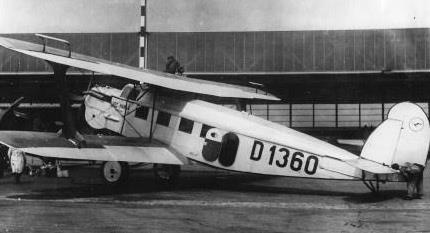
D-1360 |
"Rostock". Built in 1927. First flight in 1928 (Pilot Flugkapitän W. Noack). In April 1928 registered to Caspar AG, Travemünde, in August 1928 to DLH AG. Destroyed in July 1930 |
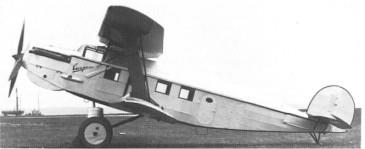
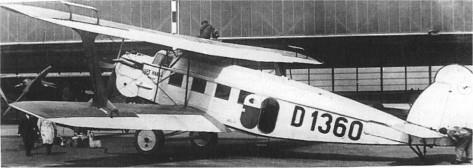
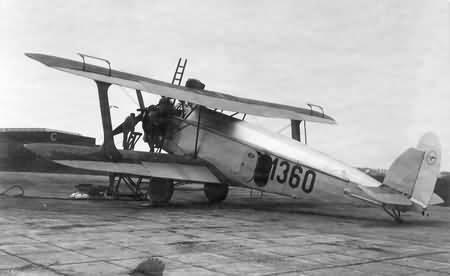
Caspar-Verkehrsflugzeug C 35 Priwall.
Das neue Verkehrsflugzeug C 35 „Priwall" der Caspar-Werke
A.-G., Travemünde, ist ein zehnsitziges Landflugzeug, das im No-
vember vorigen Jahres von der Deutschen Lufthansa in Auftrag ge-
geben wurde. Als Antrieb wurde vom Besteller der 500/600 PS
BMW VI Motor vorgeschrieben. Von den Abnahmebedingungen sind
nachfolgende von besonderem Interesse: abgeschlossener Raum für
die beiden Führer, bequeme Kabine für 8 Personen, Toilette, Gepäck-
raum, Betriebsstoff für 5 Stunden; bei ca. 4000 kg Fluggewicht eine
Reisegeschwindigkeit von 160 km, eine Höchstgeschwindigkeit von
175 km, eine Steigfähigkeit von 1000 m in 9 Minuten und 2000 m in
29 Minuten, gute Flugeigenschaften.
Die geforderten Bedingungen wurden in dem in Stahlrohr und Holz
gebauten einstieligen Rumpfdoppeldecker C 35 erfüllt.
Der Doppeldecker, eine Ausnahmeerscheinung im deutschen Luft-
verkehr, wurde gewählt, weil er gegenüber einem gleichwertigen Ein-
decker leichtere Flügel, erheblich kleinere Spannweite und geringere Rumpflänge ergibt und hierdurch für
seine Unterstellung weniger Bodenfläche benötigt wird. Die Unterstellungskosten eines Flugzeuges werden
im In- und Ausland nach der Fläche aus größter Länge X größter Breite berechnet. Weitere Vorteile
ergeben sich aus der Bauart für Versand durch Bahn oder Schiff. Als Baustoffe fanden Stahlrohr und Holz
Verwendung, da ver- schiedene Gründe diese Bauweise als besonders vorteilhaft erscheinen ließen.
Es ist genügend bekannt, daß der Luftverkehr, um rentabler zu werden, stets die Forderung „billiger'* an
die Bauindustrie stellt, und da sich die Baukosten bei der Gemischtbauweise wesentlich niedriger als bei
Ganzmetallflugzeugen stellen, wurde erstere gewählt. Daß Flugzeuge dieser Bauweise außerdem in den
Reparaturkosten billiger sind, haben die Statistiken der Luftverkehrs- und der Versicherungsgesellschaften
in den letzten Jahren gezeigt. Ein Punkt, der viel umstritten wird, ist die Lebensdauer der Ganzmetall-
flugzeuge. Denjenigen, welche die größere Lebensdauer als erwiesen bezeichnen, muß entgegengehalten
werden, daß nach Veröffentlichung der Deutschen Lufthansa die technische Veralterungsquote von
Landverkehrsflugzeugen zur Zeit ca. 3 Jahre beträgt, und daß Flugzeuge, welche in Stahlrohr und Holz
gebaut sind, eine Lebensdauer von fünf und mehr Jahren haben. Die Leistungen der Flugzeuge beider
Bauarten können als gleich angesehen werden.
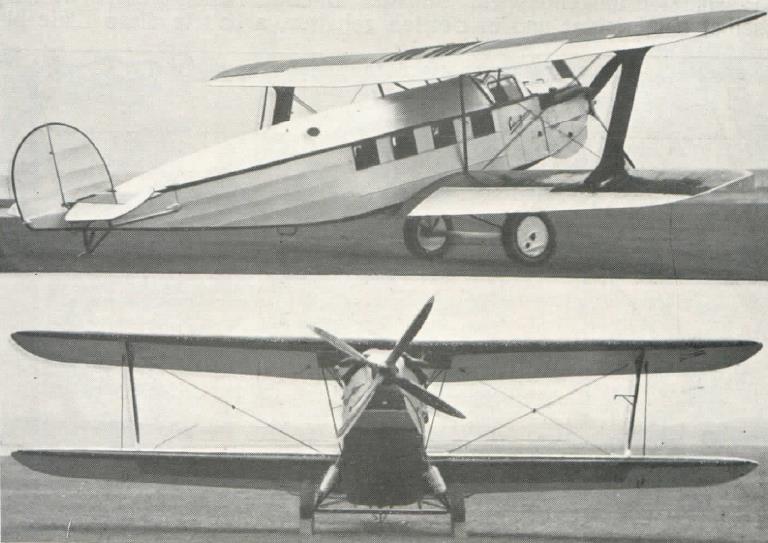
Der Aufbau, sowie die Kabine ist aus den nachstehenden Abbildungen ersichtlich.
Der Passagierraum (Kabine) mit einer Stehhöhe von 1,90 m nimmt acht bequeme, mit verstellbarer
Rückenlehne versehene Ledersessel auf, von denen jeder an einem der acht Fenster steht. Die 50X50 cm
großen Fenster sind durch Kurbeln versenkbar und schließen vollkommen luftdicht ab. Die Kabine mit
Linoleumfußboden, mit Naturleder an den Wänden bis zur Fensterhöhe und darüber abwaschbarer weißer
Linkrusta, mit Gepäcknetzen und Heizung macht in den gut abgestimmten Farben einen gediegenen, vornehmen Eindruck. Die gut regulierbare Heizung erfolgt in bekannter Weise durch Heißluft vom Auspuff des Motors aus. Die Tür nach dem Führerraum ist als Schranktür ausgeführt, in welcher Getränke, Keks und Schokolade mitgeführt werden können.
Der vor der Kabine befindliche doppelsitzige, ebenfalls heizbare Führerstand mit Doppelsteuerung ist vollkommen geschlossen. Die Decke ist aus Cellon; die vorderen und seitlichen Schiebefenster aus Kinonglas sind leicht zu öffnen und zu schließen. Alle wichtigen Bedienungshebel sind derart angebracht, daß sie von beiden Sitzen aus leicht zugänglich sind. Die Sitze des Führerstandes sind der Höhe und Länge nach verstellbar. Eine Preßluftflasche zum Anwerfen des Motors befindet sich unter dem rechten Führersitz. Die vom Auftraggeber vorgeschriebene Instrumentierung enthält folgende Geräte: Höhenmesser, Staudruckmesser, Drehzähler, Askania-Kreisel, Führerkompaß über der Steuersäule liegend. Richtkompaß in der Mitte des Führerstandes, Borduhr, Oel- und Benzinstandanzeiger, Oel- und Kühlwasser-thermometer und Oeldruckmesser. Vergaserbrand-Feuerlöscher und elektrisches Schaltbrett vervollständigen die Einrichtung. Der Strom wird von einer Eisemann-Licht-maschine mit Druckpropeller erzeugt. Der Akkumulator liegt unter dem Fahrerstand. Das Flugzeug hat die vorgeschriebenen vier Positionslampen, weiter Beleuchtung in der Kabine und Toilette sowie Lampen an den Kompassen. Ferner ist eine Kabelroller-Landlampe im Führerstand vorgesehen.
Vor dem Führerstand liegt auf dem mit dem Rumpf fest verbundenen Stahlrohrgerüst der BMW VI Motor. Die Verkleidungsbleche sind derart angeordnet, daß alle wichtigen Teile des Motors leicht zu-gänglich sind. Die Motorverkleidung vor dem Führerstand fällt nach vorne derart ab, daß man im Reiseflug den Eindruck hat, in einer Kanzel zu sitzen, von der aus der Blick ungestört über das ganze Gelände reicht. Der NKF-Kühler liegt unter dem Motor. Als Propeller wird eine vierflügelige Holzkonstruktion der Firma Heine gewählt. Hinter der Kabine befindet sich die Toilette, die mit einer nach zwei Seiten schließenden Tür derart eingerichtet ist, daß ein Teil von ihr beim Fin- und Aussteigen als Durchgangsraum Verwendung findet. Es ist dadurch erreicht, daß sie einerseits sehr geräumig ist, und daß andererseits der Kabinenraum im Fluge vor der Einsteigtür noch eine zweite Verschlußtür besitzt. Hinter der Toilette schließt sich der Gepäckraum an, der durch eine zweiteilige Tür von der linken Seite - der Einsteigseite zugänglich ist.
Das Fahrgestellt hat durchgehende Achse und Federbeine vorne. Die hinteren Streben sind ungefedert. Es waren Räder von 1,25 m Durchmesser und 0,25 m Reifenbreite vorgeschrieben. Auf Wunsch kann das Flugzeug mit geteilter Achse geliefert werden. Das obere, auf dem Baldachin ruhende Tragdeck ist durchgehend, die beiden unteren Tragdecks stoßen an den Rumpf an: beide sind ganz aus Holz und Stoff ausgeführt. Der gesamte Betriebsstoff befindet sich in zwei Behältern in dem Baldachinteil des oberen Tragdecks. Die durch einen J-Stiel verbundenen, mit Stromliniendraht verspannten Tragdecks sind derart gestaffelt, daß der vordere Holm des unterenTragdecks sich unter dem hinteren Holm des oberen Tragdecks befindet. Sowohl oberes wie unteres Tragdeck haben Querruder. Das Leitwerk ist in altbewährter Form mit sperrholzbeplankter Höhenflosse, Stahlrohrhöhenruder-, Seitenruder und Kielflosse ausgeführt. Das Flugzeug, welches eine gelungene Konstruktion des technischen Leiters der Caspar-Werke, Ingenieur Herrmann, darstellt, hat seine Werkflüge bis zur DVL-Prüfung unter Führung des bekannten Deutschen-Lufthansa-Piloten Walter Noack in recht kurzer Zeit durchgeführt. Besondere Abänderungen ergaben sich aus den Werkflügen nicht mehr, ein Nachweis, daß die Konstruktion von Anfang an richtig war.
Die amtlichen Prüfungsergebnisse ergeben sich aus der am Schluß beigefügten Zusammenstellung und beweisen, daß die von der Deutschen Lufthansa geforderten Leistungen wesentlicb überschritten worden sind.
Das Flugzeug wird in den Flugbetrieb der Deutschen Lufthansa eingestellt. Wir hoffen, daß sich dieses neueste Flugzeug der Deutschen Luftflotte, welches sich durch niedrige Anschaffungskosten (entsprechend niedrige Versicherungs-, Verzinsung- und Amortisationsquoten), durch niedrige Reparaturkosten, durch niedrige Unterstellungskosten und durch hohe Leistungen bei guten Flugeigenschaften auszeichnet, auch im Dauerbetrieb bewährt.
Größen- und Leistungsangaben der C 35, Bau-Nr 7015: Länge 13,27 in, Spannweite 16,72 in, erforderliche Torhöhe 5 m, Flächengröße 70 m2, Motor BMW VI 500,600 PS.
Bei weiteren Flugzeugen werden 215 km sowie verbesserte Steig-leistungen firmenseitig garantiert. Das Baumuster C 35 wird auch als Zweisehwimmer-Seeflugzeug geliefert. (10 sitze, 185 km)