| Type |
Single seat sportplane |
| Engine |
1 Böackburn "Tomtit" |
1 Hirth |
| Dimensions |
Length 5 m, height , span 11 m , wing area , |
| Weights |
Empty , loaded 280 kg , max. take off weight |
| Performance |
Max.. speed 100 km/h, cruising speed , range , endurance , service ceiling , climb |
| Type |
Werk.Nr |
Registration |
History |
|
|
D-602 |
|
|
|
D-606 |
|
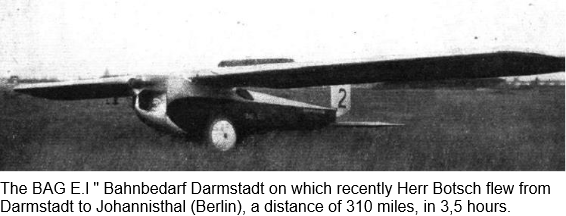
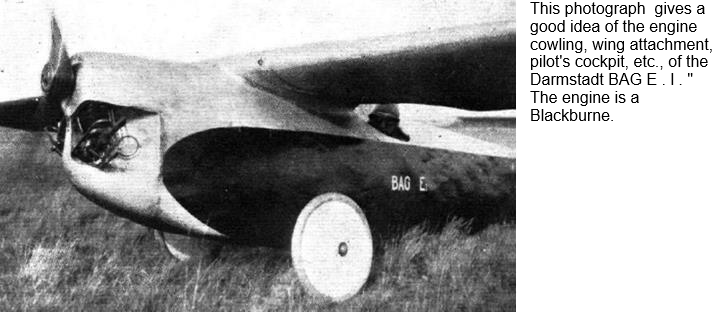
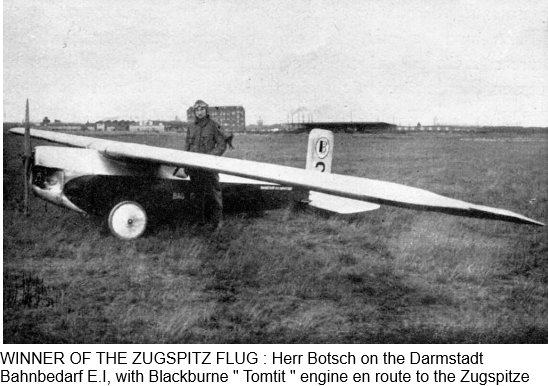
BEI der Konstruktion dieses hier beschriebenen Typs wurde von dem Gedanken ausgegangen, ein Flugzeug
zu bauen, das mit verschwindend kleiner Motorkraft, d. h. mit geringem Betriebsstoffverbrauch in der
Lage ist, Reiseflüge und Sportflüge auszuführen. Außerdem sollte auch die Maschine in geeignetem Gelände
als Segelflugzeug verwendbar sein. Beim Bau dieses Flugzeuges sind die aus den Rhönsegelflügen
gewonnenen Erfahrungen im weitesten Maße benutzt worden. Eshandelt sich hierbei nicht etwa um ein
Segelflugzeug miteinem eingebauten Hilfsmotor, sondern die Erfahrungendes Segelflugzeugbaues wurden
nur zweckentsprechend bei der Herstellung dieses Leichtmotorflugzeuges verwertet.
Der Rumpf ist vollkommen aus Sperrholz hergestellt. Das Fahrgestell ist bis auf die Räder in den Rumpf
verlegt. Irgendwelche Streben oder sonstige vorstehende Teile, die beim Ianden beschädigt werden könnten,
sind nicht vorhanden. Die Flächen sind vollkommen freitragend in einholmiger Bauart mit Sperrholznase
ausgeführt. Es ist größter Wert auf hohe Baufestigkeit gelegt,- trotzdem beträgt das Gesamtgewicht der
Maschine flugfertig einschließlich Betriebsstoff für 4 Stunden nur ca. 187 kg.
Das Flugzeug ist mit einem Viertaktmotor von 696 cm 3 Zylinder-Inhalt ausgestattet. In abmontiertem Zustande
sind die Abmessungen so klein, daß die Maschine überall bequem untergebracht werden kann. Der Raumbedarf
beträgt dann 1.20X1.20X5.- m.
Die Probeflüge der Maschine, die auch bei Stürmischem Wetter ausgeführt wurden, haben hervorragende
Flugeigenschaften gezeigt; selbst unter ungünstigsten Verhältnissen lag die Maschine vollkommen in der Hand
des Führers. Infolge seines billigen Anschaffungspreises,seiner robusten Bauart, der bequemen Unterbringungs-
möglichkeit und leichten fliegerisdien Handhabung bietet der Apparat eine verhältnismäßig billige Möglichkeit;
sidi flugsportlich zu betätigen.
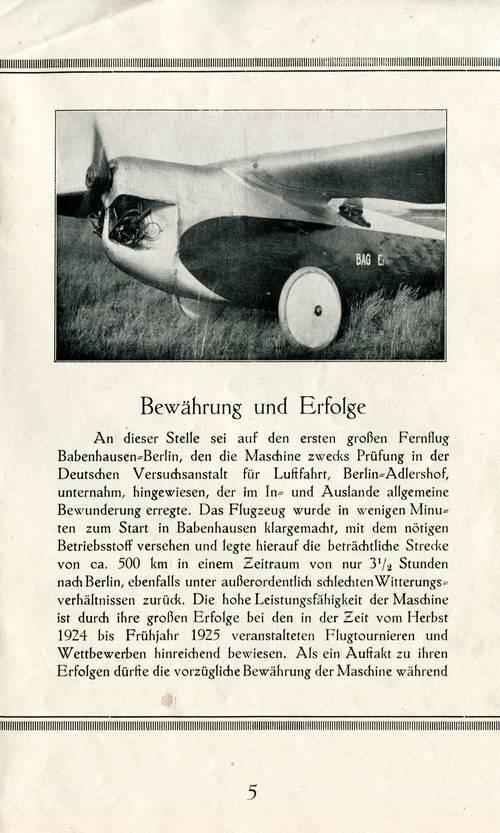
Bewährung und Erfolge An dieser Stelle sei auf den ersten großen FcrnHug Babenhausen-Berlin, den die
Maschine zwedts Prüfung in der Deutschen Versuchsanstalt für Luftfahrt, Berlin-Adlershof,unternahm, hingewiesen,
der im In- und Auslande allgemeine Bewunderung erregte. Das Flugzeug wurde in wenigen Minuten zum Start in
Babenhausen klargemacht, mit dem nötigen Betriebsstoff versehen und legte hierauf die beträchtliche Strecke
von ca. 500 km in einem Zeitraum von nur V/t Stunden nach Berlin, ebenfalls unter außerordentlich schledilen
Witterungsverhältnissen zurück. Die hohe Leistungsfähigkeit der Maschine ist durch ihre großen Erfolge bei den
in der Seit vom Herbst 1924 bis Frühjahr 1925 veranstalteten Flugtournieren und Wettbewerben hinreichend
bewiesen. Als ein Auftakt zu ihrenErfolgen dürfte die vorzügliche Bewährung der Maschine während
der im September 1924 in Frankfurt a. M. veranstalteten Flugtage bereits anzusehen sein, wobei, wie die Presse sehr
treffend berichtete, das Flugzeug den Vogel abgeschossen hatte. Nach diesem Zeugnis seiner tadellosen Bewährung
nahm das Flugzeug auch einige Wochen später an dem vom 27. bis 30. September in Darmstadt veranstalteten
Deutschen Luft Wettbewerb 1924 teil. Welche großartigen Leistungen dieser Typ in diesem Wettbewerb vollführte,
ist zum großen Teil durch die Tagespresse sowie durch die sportlichen Berichte bekannt. Geführt von dem erfolgreichen
Piloten Borsch wurde das allgemein auch unter dem Beinamen „kleine Libelle" bekannte Flugzeug allein mit 4 Ehren-
preisen, die sich auf seine Leistungen im Schnelligkeitsflug mit Meldungsabwurf, Höhenflug mit Kurvcngleitflug,
Geschicklichkeitsflug und vor allen Dingen auf seine aufsehenerregenden Erfolge im Fünfländer-Flug resp.
Süddeutschen Zuverlässigkeitsflug erstreckten, ausgezeichnet.
An diese Erfolge reiht sich würdig die Höchstleistung der Maschine beim Zugspitzflug am 31. Januar 1925 in Garmisch-
Partenkirchen. Die Maschine wurde bei dieser Flugveranstaltung mit dem 1. Preis gekrönt. Hierbei ist besonders zu be-
rücksichtigen, daß sie auch bei diesem Flug mit den best durch- konstruierten und mit stärkeren Motoren ausgerüsteten
Aparaten prominenter Flugzeugfirmen im schärfsten Wettbewerb stand.







