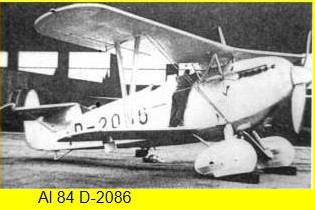
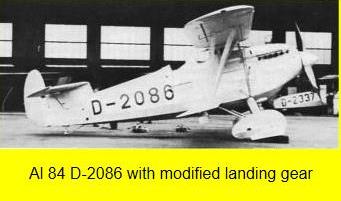
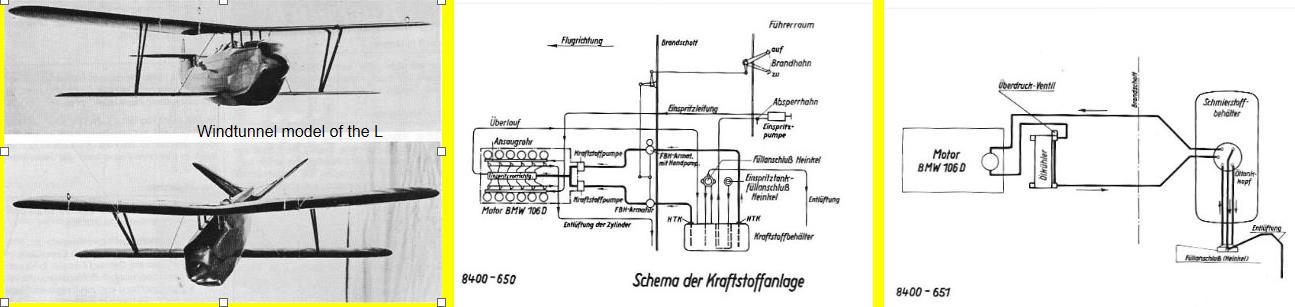
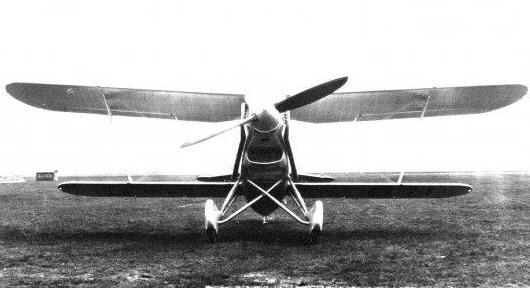
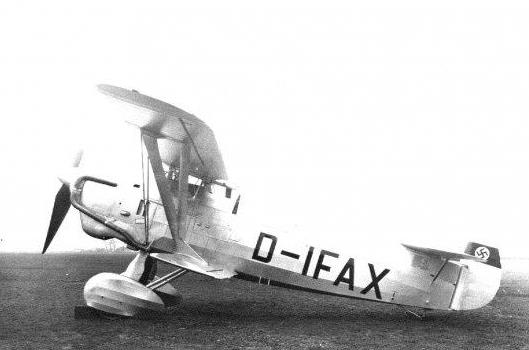
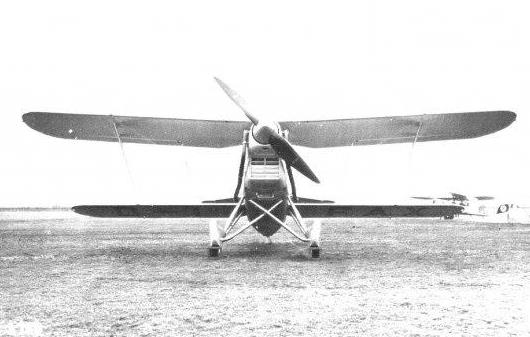
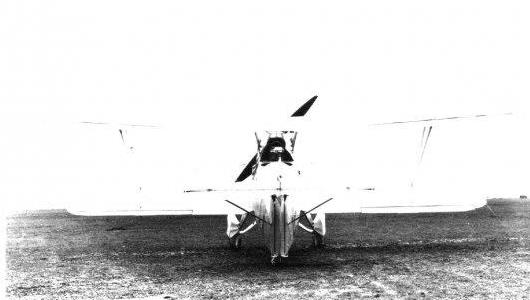
When, in 1931, economic circumstances dictated amalgamation of the Albatros Flugzeugwerke with the Focke-Wulf Flugzeugbau, flight testing had just commenced of a new tandem two-seat fighter, the L.84 powered by a 660hp BMW VIu 7.3Z water-cooled 12- cylinder Vee-type engine. A single-bay biplane with V-type interplane struts, the L.84 had plywood-covered wooden wings and a welded steel-tube fuselage primarily fabric covered. Armament consisted of two fixed forward-firing 7.9mm machine guns and a similar weapon on an aft ring mounting. The first prototype was destroyed during flight testing, but a second prototype was completed by Focke-Wulf and flown in February 1933, this being referred to as the L.84C and featuring a revised cooling system. Twelve L.84 fighters were ordered from Focke-Wulf by the Reichswehr, but, in the event, only a few were completed, the remainder being cancelled. One was used under the designation L.84E to evaluate the Rolls-Royce Kestrel HIS engine, and another, fitted with a fuel-injection version of the BMW VIu engine, was known as the L.84F.
| Type |
Two seat fighter |
| Engine |
1 × BMW VI |
| Dimensions |
Length 10,5 m , height , span 11,0 m , wing area , |
| Weights |
Empty , loaded 2150 kg, max. take off weight |
| Performance |
Max.. speed , cruising speed , range , endurance , service ceiling , climb |
| Armament |
2 fixed, forward-firing 7.92 mm MG, 1 flexible 7.92 mm MG in rear cockpit |
| Type |
Werk.Nr |
Registration |
History |
| A |
10187 |
D-1899 |
In Febr. 1933 to Focke-Wulf AG |
|
10190 |
D-2086 |
In 1931 to RDL Erprob.-Stelle, Staaken. Crashed at Braunschweig on the 21 sept.1932 |
| L 84C |
278 |
D-IZON |
Built by Focke-Wulf. Revised cooling system |
| L 84C |
279 |
D-INKY |
Built by Focke-Wulf. Revised cooling system |
| L 84C |
280 |
|
Built by Focke-Wulf. Revised cooling system |
| L 84E |
448 |
D-IZON |
Built by Focke-Wulf, Rolls-Royce Kestrel engine. Tested at Est.Travemunde June 1936 |
|
449 |
D-IFAX |
Tested at Est.Travemunde November 1845 |
| L 84F |
450 |
|
Built by Focke-Wulf, BMW engine with with fuel-injection. Probably not finished |








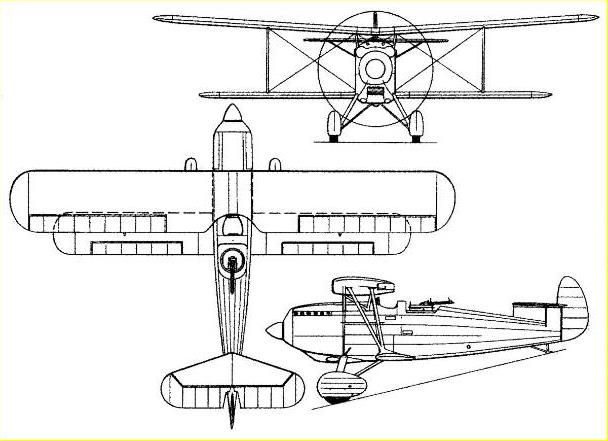
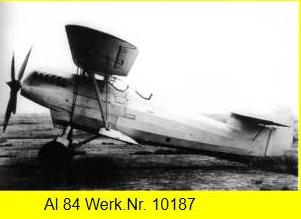
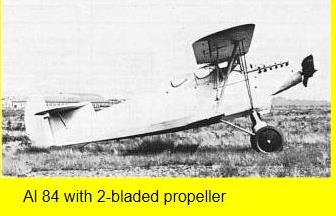
Albatros L 84
Hans Justus Meier's interesting article on the Albatros L 84 (Li 5/82, pp. 175-177) can be supplemented or corrected in some details based on ADL documents.
The L 84 was (according to all available sources) developed as a two-seater fighter; its use as a reconnaissance aircraft is not mentioned anywhere. The designation E 199 was merely the project number, not a type designation.
The two aircraft still manufactured by the Albatros aircraft factory in Berlin-Johannisthal (W.-Nr. 10187 and 10190) were certainly built in the sequence of their serial numbers. The date of registration, i.e., the entry in the aircraft register, and even more so the date of publication in the NfL, cannot provide any reliable clues in this regard. As already explained in an article by the German Aviation History Association (ADL) in Li 8/81, p. 309, the D-1899 is a duplicate of this certification.
K. Ries, whom H. J. Meier cites, did not take this into account in his research and also did not consider that the BMW V, unlike the twelve-cylinder BMW VI, only had six cylinders and that a BMW Vu never existed. In fact, both aircraft were delivered with BMW Vlu engines. These geared engines had the serial numbers 16761 (D-1899) and 16763 (D-2086).
As with many aircraft of the "black Reichswehr," in this case the RDL test center in Staaken, the certifications were not published in the NfL. Only after the crash of the D-2086 on September 21, 1932, near Braunschweig-Melverode and the subsequent return of the D-1899 to the manufacturer (Albatros had since merged with Focke-Wulf) did the existence of this L 84 become known in February 1933 in the NfL 33/24.6., page 182. The literature cited by H. J. Meier in [1] to [3] also fails to provide the necessary source criticism, which certainly explains the oddities and errors found in this literature.
However, it is true that the development of the L 84 as a two-seater fighter was soon abandoned. The results of the investigation into the crash of the D-2086 contributed to this. The accident occurred during a comparison flight at the DVS Braunschweig. During recovery from a dive without throttle, first the left pair of wings and then the right separated from the fuselage. The two occupants, pilot von Greiff and his companion von Flotow, were able to escape by parachute, while the aircraft was destroyed upon impact.
According to the final investigation report of the German Aviation Research Institute (Uh 200/17.3, dated September 14, 1934), it was determined that during recovery from the dive, at least a load factor of nA = 7 must have been reached, which the nose of the upper wing could not withstand. The difficulty of the accident investigation is illustrated by the fact that the final report was not submitted until two years after the loss of the D-2086. It contains the following findings (verbatim):
1. The recovery from the dive was too harsh (nA = 7).
2. The strength of the wing nose corresponds to the load assumptions that were valid during the design of the L 84 model, but no longer to the DLA load assumptions of April 1933. Because these latter specifications prescribe a load distribution across the chord, which provides for higher, but also more realistic, loads for the wing nose, the existing ultimate load factor decreases from the original calculated value of n = 10 to 10.5 to the actual value of nA = 7 to 7.5.
3. The calculated critical speed of Vk = 360 km/h appears too low for aircraft of this purpose. It also does not comply with the design specifications.
Nevertheless, further L 84s were subsequently produced. In an overview plan of the RLM (LC No. 13116/35, 11/1 geh.Kdos. dated December 1, 1935), the L 84, now designated by Focke-Wulf as the Al 84, is even mentioned as a production aircraft – intended use: test platform. In the Focke-Wulf serial number list, a total of six additional aircraft can be found, namely serial numbers 278-280
and 448-450 !
This fact actually contradicts the assumption that the flight characteristics of this Albatros design were unsatisfactory, since it has been proven that mostly aircraft with no problems in terms of flight characteristics were used as test platforms. Stresses similar to those experienced in fighter use were not to be expected in this new application. In any case, of the eight L 84/Al 84 aircraft built in the summer of 1936, a total of six were at the Rechlin E-Stelle as test vehicles (M-Report, June 1936). Even the first prototype aircraft, W.-No. 10187, was still there and performed well in testing a BMW Vlu with lead-bronze bearings and a fuel-efficient (nickel-free) crankshaft.
According to the ADL documents, the existence of the following aircraft is verifiable:
Serial No. LFR B LFR C Type Designation
10187 (Alb.) D-1899 D-IBIM . L 84
10190 (Alb.) D-2086 L 84 (Crash 21. 9. 1932)
278 (Fw) D-I??? Al 84C
279 (FW) D-INOF Al 84C
280 (FW) D-IPET Al 84D
448 (FW) D-IZON Al 84D
449 (FW) D-I FAX Al 84 E
450 (FW) D-INOR Al 84E
It would now be logical to assume that Serial No. 278 bears the registration D-INKY mentioned in the magazine "Der Flieger" (4/79, p. 154/155). The catch, however, is that another aircraft undoubtedly flew with this certificate, namely the Bf 108 B-1, registration number 850, which took off for its maiden flight in Augsburg on February 1, 1937. Double registrations practically never occurred with the LFR C, the letter certificates, so another registration number must be sought for the L 84, registration number 278. It is worth noting that an L 84 was transferred from Bremen to the Travemünde registration station on January 10, 1936.
It remains unclear why the RLM procurement program (LA/LC No. 2500/34 gKdos. LA II 2b of July 1, 1934) and its supplements only provided for two Al 84s (W.-No. 448 and 280) for delivery to the Reich, while apparently far more machines were accepted and deployed at the E-Stellen. It is also unclear which machines bore the designations L or Al 84 A, B, and F, quite apart from the fact that practically no technical data has been preserved. Gunther Ott (ADL)
Postscript
Albatros L 84
The interesting article by Hans Justus Meier about
the Albatros L 84 (Li 5/82, pp. 175-177) can be supplemented or corrected in some details according to
ADL documents.
The L 84 was (according to all available sources)
developed as a two-seater fighter; its use as a
reconnaissance aircraft is nowhere mentioned. The designation E
199 was merely the project number, not a
type designation.
The two aircraft still manufactured by the Albatros aircraft works in
Bertin-Johannisthal (serial numbers
10187 and 10190) were certainly built in the sequence of their serial numbers. The date of registration, i.e., the entry in the aircraft register, and especially the date of publication in the NfL (Notices to Airmen) cannot provide reliable
indications in this regard. As already explained in an article by the
Working Group for German Aviation History (ADL)
in Li 8'81, p. 309, the
D-1899 is a double registration.
K. Ries, whom H. J. Meier quotes, did not take this into account in his research and also failed to consider that the BMW V, unlike the twelve-cylinder BMW VI, only had six cylinders and that a BMW Vu never existed. In fact, both aircraft were delivered with BMW Vlu engines. These geared engines had the serial numbers 16761 (D-1899) and 16763 (D-2086).
As with many aircraft of the "Black Reichswehr," in this case the RDL test center Staaken, the registrations were not published in the NfL (German Air Force Notices). Only after the crash of D-2086 on
September 21, 1932, near Braunschweig-Melverode and the subsequent return of D-1899 to the manufacturer (Albatros had since merged with Focke-Wulf), was the existence of this L 84 revealed in February
1933 in NfL 33'24.6., page 182. The literature cited by
H. J. Meier under (1) to [3] does not reveal the indispensable source criticism for this either, which certainly explains the peculiarities and errors found in this literature.
However, it is true that the development of the L 84 as a two-seater fighter was soon abandoned. The investigation results of the D-2086 crash contributed significantly to this decision. The accident occurred during a comparative flight test at the DVS (German Research Institute for Aviation) in Braunschweig. During the recovery from a dive without power, first the left wing pair and then the right wing pair separated from the fuselage. The two occupants, pilot von Greiff and his companion von Flotow, were able to escape by parachute, while the aircraft was destroyed on impact. According to the final investigation report of the German Research Institute for Aviation (Uh 200/17.3, dated September 14, 1934), it was determined that during the recovery from the dive, a load factor of at least nA = 7 must have been reached. which the
nose of the upper wing could not withstand. How difficult the accident investigation was becomes clear from the fact that the final report was only submitted two years after the loss of D-2086. It contains the following findings (verbatim):
1. The recovery from the dive was too abrupt (nA = 7).
2. The strength of the wing nose corresponds to the load assumptions that were valid during the design of the L 84 model, but no longer to the DLA load assumptions from April 1933. Because these latter assumptions prescribe a load distribution over the wing chord that provides for a higher, but also more realistic, load on the wing nose, the existing breaking load factor decreases from the original calculated value of n = 10 to 10.5 to the actual value of nA = 7 to 7.5.
3. The calculated critical speed of V = 360 km/h appears to be too low for aircraft of this purpose. It also does not comply with the construction regulations.
Nevertheless, further L 84s were subsequently produced. In an overview plan of the RLM (LC No. 13116/35, 11/1 secret.Kdos. dated December 1, 1935), the L 84, now designated Al 84 by Focke-Wulf, is even mentioned as a production aircraft – intended use: testbed. In the Focke-Wulf serial number list, a total of six additional aircraft can be found, namely serial numbers 278-280 and 448-450! This fact actually contradicts the assumption that the flight characteristics of this Albatros design were unsatisfactory, because it has been proven that aircraft with generally trouble-free flight characteristics were usually used as testbeds. Stresses
such as those encountered during use as a fighter aircraft were not expected
with this new purpose. In any case, of the eight L 84/
Al 84s built, a total of six aircraft were at the Rechlin test center as testbeds in the summer of 1936 (M-Report, June 1936). Even the first prototype, serial number
10187, was still there and proved useful
in testing a BMW Vlu engine with lead bronze bearings and a fuel-efficient (nickel-free) crankshaft.
According to the ADL records, the existence of the following aircraft can be proven: serial number
LFR B LFR C Sample drawing
10187 (Alb.) D-1899 D-IBIM L 84
10190 (Alb.) D-2086 L 84 (crash September 21, 1932)
278 (Fw) D-I??? Al 84C
279 (FW) D-INOF Al 84C
280 (FW) D-IPET Al 84D
448 (FW) D-IZON Al 84D
449 (FW) D-I FAX Al 84E
450 (FW) D-INOR Al 84E
It would now be logical to assume that the registration D-INKY mentioned in the magazine "Der Flieger" (4/79, pp. 154/155) was on the aircraft with serial number 278. The problem, however, is that another aircraft undoubtedly flew with this registration, namely the Bf 108 B-1 serial number 850, which took off on its maiden flight in Augsburg on February 1, 1937. Double registrations were practically unheard of with the LFR C. letter-based registrations, so that for the L 84 serial number 278, a different registration mark must probably be sought. The information that an L 84 was transferred from Bremen to the Travemünde test center on January 10, 1936, is noteworthy.
What remains unclear. which is why the RLM procurement program (LA/LC No. 2500/34 gKdos. LA II 2b of July 1, 1934) and its amendments only designated two Al 84s (W.-Nr. 448 and 280) for delivery to the Reich, while obviously far more aircraft were accepted and deployed at the testing facilities. It is also unclear which aircraft bore the designations L or Al 84 A, B and F, quite apart from the fact that the technical data are practically unavailable. Gunther Ott (ADL)