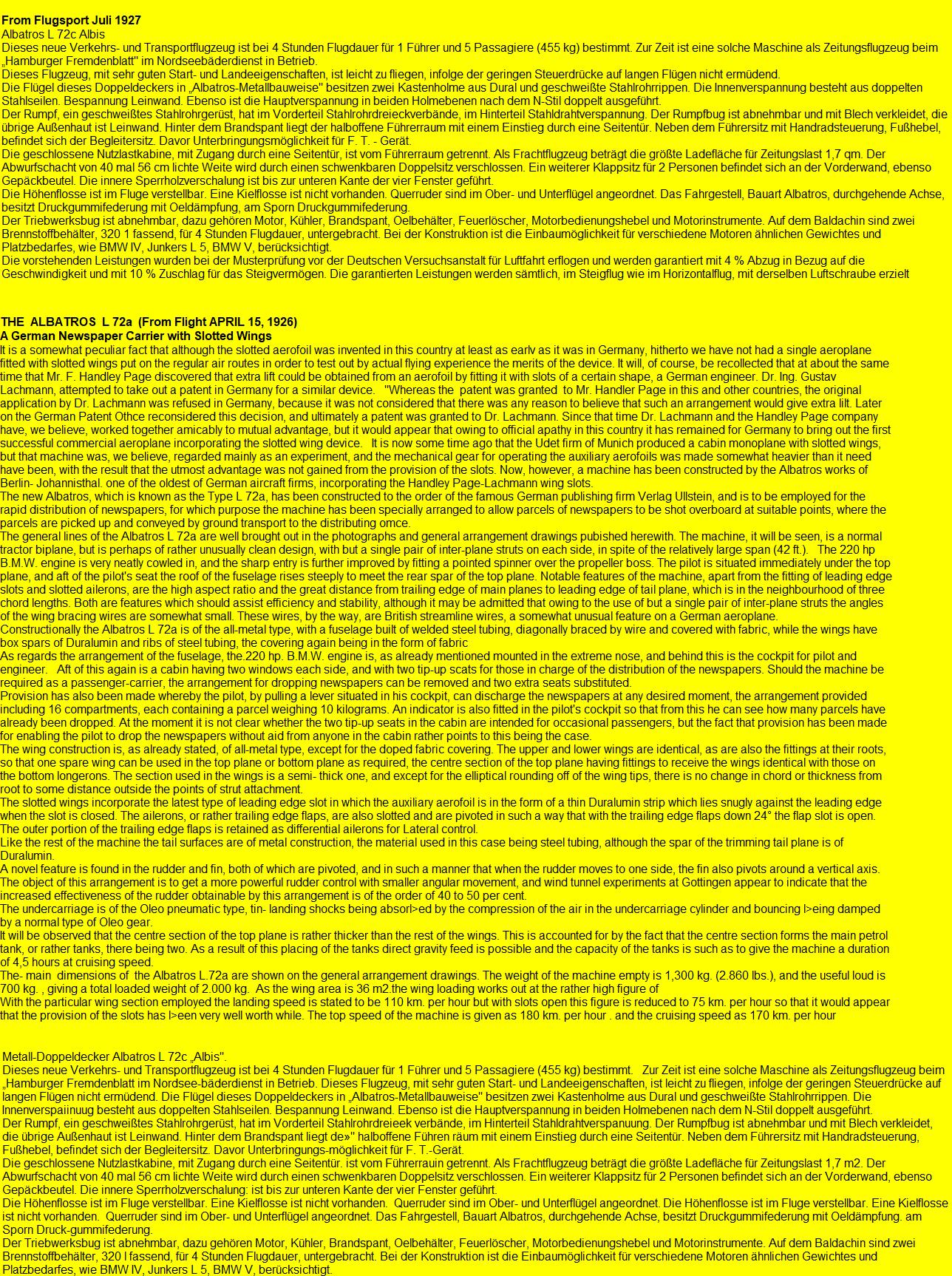
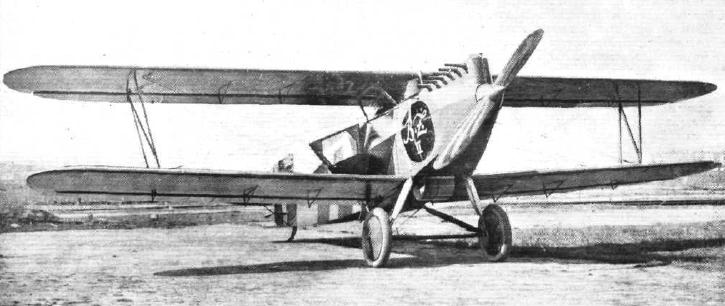
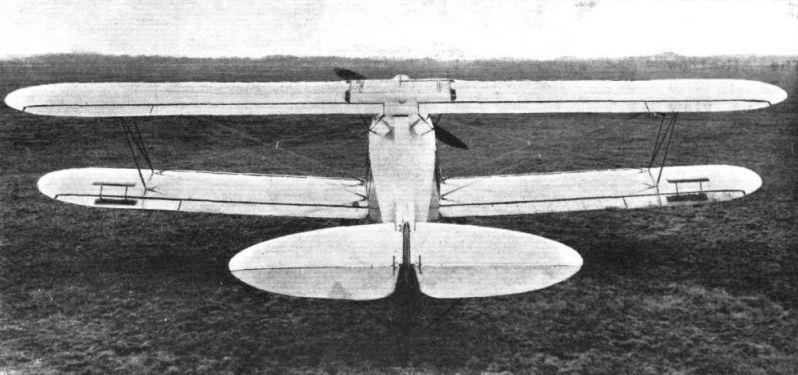
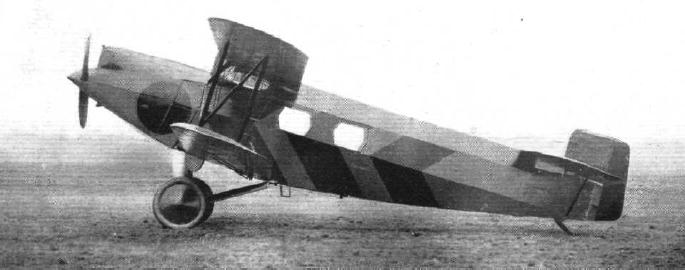
Type Two-seated transportplane b   Two-seated transportplane c  "Albis"   Two-seated transportplane
Engine 1 BMW IV
Dimensions Length 10.37 m, height 3,60 m,span 13.0 m, wing area 44,5 m2
Weights Empty , loaded  , max. take off weight   Flying weight 2075 kg Empty  1275 kg, payload 800 kg, flying weight 2075 kg
Performance Max.. speed  , cruising speed  , range , endurance  , service ceiling   , climb Max. speed 170 km/h Max. speed 162 km/h, cruising speed 153 km/h, landing speed 85 km/h, climb to 1000 m 7,0 min., to 2000 m 17,7 min., to 3000 m 40,7 min., service ceiling 3025 m
Type Werk.Nr Registration History
a  
b 10074 D-888 8th of April 1926 to Ullstein AG, Berlin. To Hamburger L.V. Gesellschaft in June 1931. Sold  to DLH in 1937
b 10075 D-890 8th of April 1926 to Ullstein AG, Berlin. To Hamburger L.V. Gesellschaft in July 1930. Sold  to DLH in 1937
c 10108 D-1140 In Febr. 1928 it belonged to Hamburger Fremdenblatt. To Hamburger L.V. Gesellschaft in March 1934. Sold  to DLH in 1937
From Flugsport July 1927

Albatros L 72c Albis

This new passenger and transport aircraft is designed for 1 pilot and 5 passengers (455 kg) with a flight duration of 4 hours. Currently, one such aircraft is in service as a newspaper delivery plane for the "Hamburger Fremdenblatt" on the North Sea resort route.
This aircraft, with very good takeoff and landing characteristics, is easy to fly and, due to the low control pressures, not tiring on long flights.
The wings of this biplane, of "Albatros metal construction," have two box spars made of duralumin and welded steel tube ribs. The internal bracing consists of double steel cables. The covering is canvas. Likewise, the main bracing in both spar planes is double-stitched in the N-style.
The fuselage, a welded steel tube frame, has triangular steel tube bracing in the forward section and steel wire bracing in the rear section. The nose section is removable and covered with sheet metal; the
Librige skin is canvas. Behind the firewall lies the semi-open cockpit with access via a side door. Next to the pilot's seat with handwheel controls and foot levers is the attendant's seat. In front of it is storage space for flight control equipment.
The enclosed payload compartment, with access via a side door, is separate from the cockpit. As a cargo aircraft, the largest loading area for newspapers is 1.7 square meters. The
drop bay, with a clear opening of 40 by 56 cm, is closed by a swiveling double seat. Another folding seat for two people is located on the front wall, as are baggage bags. The inner plywood paneling extends to the lower edge of the four windows.
The horizontal stabilizer is adjustable in flight. There is no keel. Ailerons are located on the upper and lower wings. The landing gear, type Albatros, with a continuous axle,
features rubber compression springs with oil damping, and rubber compression springs at the tail.
The engine nose is removable and includes the engine, radiator, firebox, oil reservoir, fire extinguisher, engine control levers, and engine instruments. Two fuel tanks, each with a capacity of 320 liters, are mounted on the canopy, providing enough fuel for 4 hours of flight. The design allows for the installation of various engines of similar weight and
size, such as the BMW IV, Junkers L 5, and BMW V.
The above performance figures were achieved during type testing at the German Research Institute for Aviation and are guaranteed with a 4% deduction for speed and a 10% bonus for climb rate. All guaranteed performance figures, in both climb and level flight, are achieved with the same propeller.
THE ALBATROS L 72a (From Flight APRIL 15,1926)
A German Newspaper Carrier with Slotted Wings
It is a somewhat peculiar fact that although the slotted aerofoil was invented in this country at least as earlv as it was in Germany, hitherto we have not had a single aeroplane
fitted with slotted wings put on the regular air routes in order to test out by actual flying experience the merits of the device. It will, of course, be recollected that at about the same
time that Mr. F. Handley Page discovered that extra lift could be obtained from an aerofoil by fitting it with slots of a certain shape, a German engineer. Dr. Ing. Gustav
Lachmann, attempted to take out a patent in Germany for a similar device. "Whereas the patent was granted to Mr. Handler Page in this and other countries, the original
application by Dr. Lachmann was refused in Germany, because it was not considered that there was any reason to believe that such an arrangement would give extra lilt. Later
on the German Patent Othce reconsidered this decision, and ultimately a patent was granted to Dr. Lachmann. Since that time Dr. Lachmann and the Handley Page company
have, we believe, worked together amicably to mutual advantage, but it would appear that owing to official apathy in this country it has remained for Germany to bring out the first
successful commercial aeroplane incorporating the slotted wing device. It is now some time ago that the Udet firm of Munich produced a cabin monoplane with slotted wings,
but that machine was, we believe, regarded mainly as an experiment, and the mechanical gear for operating the auxiliary aerofoils was made somewhat heavier than it need
have been, with the result that the utmost advantage was not gained from the provision of the slots. Now, however, a machine has been constructed by the Albatros works of
Berlin- Johannisthal. one of the oldest of German aircraft firms, incorporating the Handley Page-Lachmann wing slots.
The new Albatros, which is known as the Type L 72a, has been constructed to the order of the famous German publishing firm Verlag Ullstein, and is to be employed for the
rapid distribution of newspapers, for which purpose the machine has been specially arranged to allow parcels of newspapers to be shot overboard at suitable points, where the
parcels are picked up and conveyed by ground transport to the distributing omce.
The general lines of the Albatros L 72a are well brought out in the photographs and general arrangement drawings pubished herewith. The machine, it will be seen, is a normal
tractor biplane, but is perhaps of rather unusually clean design, with but a single pair of inter-plane struts on each side, in spite of the relatively large span (42 ft ). The 220 hp
B.M.W. engine is very neatly cowled in, and the sharp entry is further improved by fitting a pointed spinner over the propeller boss. The pilot is situated immediately under the top
plane, and aft of the pilofs seat the roof of the fuselage rises steeply to meet the rear spar of the top plane. Notable features of the machine, apart from the fitting of leading edge
slots and slotted ailerons, are the high aspect ratio and the great distance from trailing edge of main planes to leading edge of tail plane, which is in the neighbourhood of three
chord lengths. Both are features which should assist efficiency and stability, although it may be admitted that owing to the use of but a single pair of inter-plane struts the angles
of the wing bracing wires are somewhat small. These wires, by the way, are British streamline wires, a somewhat unusual feature on a German aeroplane.
Constructionally the Albatros L 72a is of the all-metal type, with a fuselage built of welded Steel tubing, diagonally braced by wire and covered with fabric, while the wings have
box spars of Duralumin and ribs of Steel tubing, the covering again being in the form of fabric
As regards the arrangement of the fuselage, the.220 hp. B.M.W. engine is, as already mentioned mounted in the extreme nose, and behind this is the cockpit for pilot and
engineer. Aft of this again is a cabin having two Windows each side, and with two tip-up scats for those in charge of the distribution of the newspapers. Should the machine be
required as a passenger-carrier, the arrangement for dropping newspapers can be removed and two extra seats substituted.
Provision has also been made whereby the pilot, by pulling a lever situated in his cockpit, can discharge the newspapers at any desired moment, the arrangement provided
including 16 compartments, each containing a parcel weighing 10 kilograms. An indicator is also fitted in the pilofs cockpit so that from this he can see how many parcels have
already been dropped. At the moment it is not clear whether the two tip-up seats in the cabin are intended for occasional passengers, but the fact that provision has been made
for enabling the pilot to drop the newspapers without aid from anyone in the cabin rather points to this being the case.
The wing construction is, as already stated, of all-metal type, except for the doped fabric covering. The upper and lower wings are identical, as are also the fittings at their roots,
so that one spare wing can be used in the top plane or bottom plane as required, the centre section of the top plane having fittings to receive the wings identical with those on
the bottom longerons. The section used in the wings is a semi- thick one, and except for the elliptical rounding off of the wing tips, there is no change in chord or thickness from
root to some distance outside the points of strut attachment.
The slotted wings incorporate the latest type of leading edge slot in which the auxiliary aerofoil is in the form of a thin Duralumin strip which lies snugly against the leading edge
when the slot is closed. The ailerons, or rather trailing edge flaps, are also slotted and are pivoted in such a way that with the trailing edge flaps down 24
° the flap slot is open.
The outer portion of the trailing edge flaps is retained as differential ailerons for Lateral control.
Like the rest of the machine the tail surfaces are of metal construction, the material used in this case being steel tubing, although the spar of the trimming tail plane is of
Duralumin.
A novel feature is found in the rudder and fin, both of which are pivoted, and in such a manner that when the rudder moves to one side, the fin also pivots around a vertical axis.
The object of this arrangement is to get a more powerful rudder control with smaller angular movement, and wind tunnel experiments at Gottingen appear to indicate that the
increased effectiveness of the rudder obtainable by this arrangement is of the order of 40 to 50 per cent.
The undercarriage is of the Oleo pneumatic type, tin- landing shocks being absorl>ed by the compression of the air in the undercarriage cylinder and bouncing l>eing damped
by a normal type of Oleo gear.
It will be observed that the centre section of the top plane is rather thicker than the rest of the wings. This is accounted for by the fact that the centre section forms the main petrol
tank, or rather tanks, there being two. As a result of this placing of the tanks direct gravity feed is possible and the capacity of the tanks is such as to give the machine a duration
of 4,5 hours at cruising speed.
The- main dimensions of the Albatros L.72a are shown on the general arrangement drawings. The weight of the machine empty is 1,300 kg. (2.860 Ibs.), and the useful loud is

700 kg., giving a total loaded weight of 2.000 kg. As the wing area is 36 m2.the wing loading works out at the rather high figure of
With the particular wing section employed the landing speed is stated to be 110 km. per hour but with slots open this figure is reduced to 75 km. per hour so that it would appear
that the provision of the slots has been very well worth while. The top speed of the machine is given as 180 km. per hour. and the cruising speed as 170 km. per hour
 
Metal biplane Albatros L 72c: Albis.

This new passenger and transport aircraft is designed for a flight duration of 4 hours for 1 pilot and 5 passengers (455 kg). Currently, one such aircraft is in operation as a newspaper plane with the
"Hamburger Fremdenblatt" in the North Sea resort service. This aircraft, with very good takeoff and landing characteristics, is easy to fly and, due to the low control pressures, not tiring on long flights. The wings of this biplane, of "Albatros metal construction," have two box spars made of duralumin and welded steel tube ribs. The internal bracing consists of double steel cables. Fabric covering. Likewise, the main bracing in both spar planes is double-stitched in the N-style.
The fuselage, a welded steel tube frame, has steel tube triangular bracing in the forward section and steel wire bracing in the rear section. The bow section is removable and covered with sheet metal,the rest of the outer skin is canvas. Behind the firewall lies the semi-open cockpit with access via a side door. Next to the pilot's seat with handwheel controls and a foot lever is the passenger seat. In front of it is storage space for radio equipment. The enclosed payload compartment, with access via a side door, is separate from the cockpit. As a cargo aircraft, the largest loading area for newspapers is 1.7 m². The drop chute, measuring 40 by 56 cm (clear opening), is closed by a swiveling double seat. Another folding seat for two people is located on the front wall, as are baggage bags. The inner plywood paneling extends to the lower edge of the four windows. The horizontal stabilizer is adjustable in flight. There is no keel. Ailerons are located on the upper and lower wings. The landing gear, type Albatros, features a continuous axle and has compression rubber suspension with oil damping.
The tail section also has compression rubber suspension.
The engine nose is removable and includes the engine, radiator, firebox, oil tank, fire extinguisher, engine control levers, and engine instruments. Two fuel tanks, with a capacity of 320 liters each, are mounted on the canopy, providing enough fuel for 4 hours of flight. The design allows for the installation of various engines of similar weight and space requirements, such as the BMW IV, Junkers L 5, and BMW V.