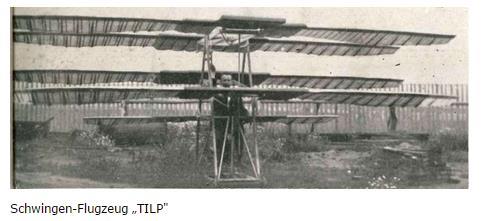
Schwingenflugzeug A, Tilp.
Die Erforschung neuer Flugarten hat nur auf dem Gebiete des Segelfluges einen Fortschritt zu verzeichnen. Leider ist der Schwingenflug in letzter Zeit recht" vernachlässigt worden. Daher ist es erfreulich, daß es trotzdem noch Ingenieure gibt, die mit unverminderter Zähigkeit versuchen, das Schwingenflugproblem zu lösen. Zu letzteren gehört Ing. Tilp, der seit 1911 Versuche mit Schwingenfliegern macht und nunmehr seinen dritten Apparat fertig gestellt hat. Der Apparat besteht, wie die untenstehende Abbildung erkennen läßt, aus einem Rahmenwerk in Dreiecksform, in welchem unten der Führersitz untergebracht ist und oben die zwei Balancierrahmen gelagert sind. Die Balancierrahmen, welche an ihren Enden nach Tandemart die Flügel tragen, schwingen in der Flugrichtung wagebalkenartig und gegenläufig. Eine gemeinsame Pedalkurbel versetzt den Rahmen und damit die vier Flügel, von denen je zwei desselben Rahmens mittels Gelenk-stangen verbunden sind, in schwingende Bewegung, so zwar, daß sie beim Schlag ihre volle Fläche bieten, beim Aufwärtsgang sich in die Bewegungsrichtung einstellen und dadurch geringen Widerstand hervorrufen. Diese Einstellung der Flügel erfolgt automatisch. An der oberen Gelenkstange greift der Steuerhebel an, an welchem auch die Gelenkstange des unteren Rahmens angeschlossen ist, so daß durch diesen Steuerhebel die Anstellwinkel aller vier Flügel verstellt werden können. Die Verstellung der Anstellwinkel dient der Höhensteuerung, während die gegenläufig verwindbaren Flächen der hinter dem Sitz angebrachten horizontalen Steuerfläche als Seitensteuer wirken sollen. Jeder Flügel besteht nur aus einem, jedoch sehr kräftigen Holm rechteckigen Querschnittes aus Eschenholz, in welchem die Rippen eingesetzt sind. Die Rippen sind in der Flächenebene beweglich und beherrschen je einen der, das ganze Tragdeck bildenden, und gleich Schuppen übereinander greifenden Flächenteile. Diese besondere Einrichtung, die sich aus langen und kostspieligen Versuchen als beste erwies, macht es den Flügeln möglich, sich nach vorn und unten elastisch durchzubiegen.
Bei diesem Apparat, so schreibt uns Herr Tilp, ist noch einiges zu verbessern, da der Flügelhub von zirka 400 mm zu klein ausgefallen ist. Deshalb ist die Flügelschlaggeschwindigkeit zu gering, um auch bei event. Windstille abfliegen zu können, und ist daher noch ein Gegenwind erforderlich. Die Hauptsache jedoch, die mühelose Betätigung der Flügel, was schon seit uralten Zeiten angestrebt wird, bisher aber noch nirgends und von keiner anderen Seite auch nur annähernd zustande gebracht wurde, ist nunmehr endlich erreicht. Wie die Vorversuche im Hofe des Kohlenschachtes „Mariahilf bei Eidlitz-Komotau einwandfrei bewiesen haben, lassen sich die vier Flügel spielend leicht und mühelos mittels der Pedalkurbel betätigen.
| Type |
Single seat ornithopter |
| Engine |
|
| Dimensions |
Length , height , span , wing area , |
| Weights |
Empty , loaded , max. take off weight |
| Performance |
Max.. speed , cruising speed , range , endurance , service ceiling , climb |