| Type |
Erla 5 Single seat sportplane |
Erla 5D Single seat sportplane |
| Engine |
1 DKW with a fixed 2-bladed wooden propeller |
1 Zündapp 9-092 with a fixed 2-blade wooden propeller Ø 1,80 m |
| Dimensions |
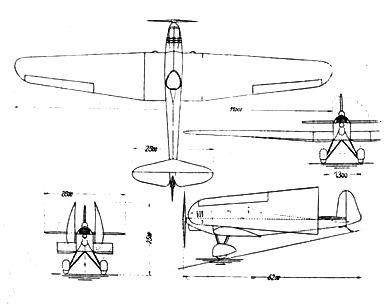
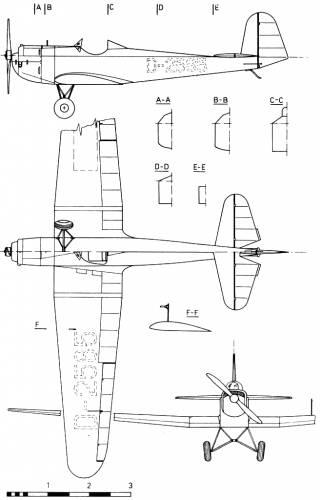
Length 6,20 m , height 1,75 m , span 11,0 m , wing area 13,7 m2, aspect ratio 8,8 |
Length 6,80 m , height 1,80 m , span 11,0 m , wing area 14,0 m2 , aspect ratio 8,06 |
| Weights |
Empty 220 kg, loaded 325 kg (aerobatic) 340 kg, max. take off weight |
Empty 265 kg, loaded 385 kg , max. take off weight
|
| Performance |
Max.. speed 125 km/h , cruising speed 110 km/h , range 400 km, endurance , service ceiling 3500 m , climb to 1000 m 9,0 min. to 2000 m 24 min., landing speed 50 km/h |
Max.. speed 160 km/h , cruising speed 140 km/h , range 430 km (620 km), endurance 4,5 h , service ceiling 4700 m , climb 3,5 m/sec. climb to 1000 m 6,2 min. to 2000 m 15,5 min., landing speed 62 km/h |
| Type |
Werk.Nr |
Registration |
History |
|
|
D-YBOX |
Julius Hawlic/Chemnitz |
|
|
D-YDAR |
Erla Maschinenwerk |
|
|
D-YGAS |
Artur Pex/Tempehof |
|
|
D-YHAV |
Erla Maschinenwerk |
|
|
D-YHIK |
Erla Maschinenwerk |
|
|
D-YJEP |
Erla Maschinenwerk |
|
|
D-YKES |
Erich Merkel/fFinsterwalde |
|
|
D-YLEX |
Erla Maschinenwerk |
|
|
D-YNLT |
Eria Maschinenwerk - Broken up 5.36 |
|
|
D-YPAN |
DVl |
|
|
D-YRAN |
Walter ThornsjFinsterwalde |
|
|
D-YTOS |
Helmut Heubel/Finsterwalde |
| D |
|
D-YMOP |
|
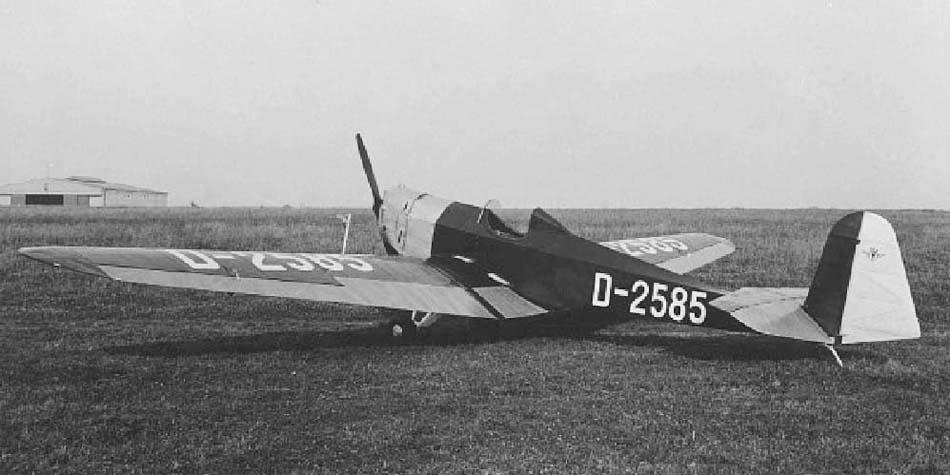
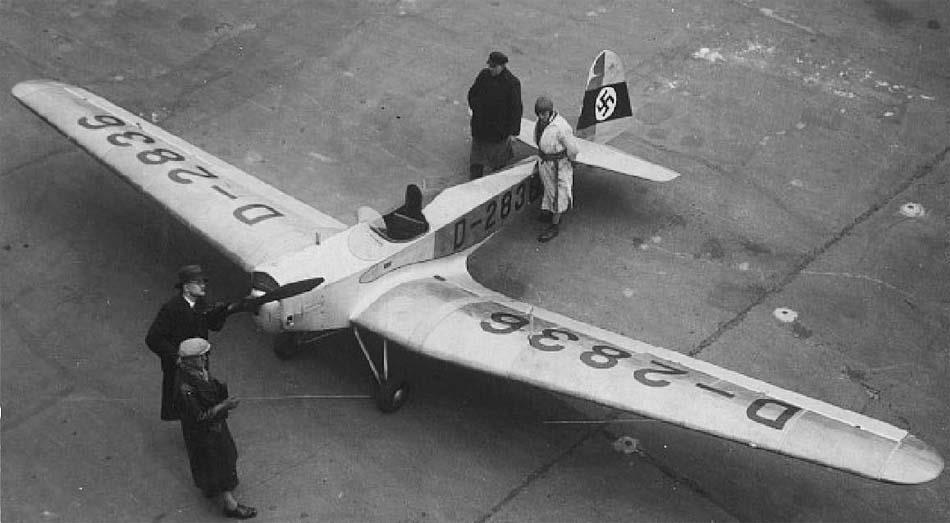
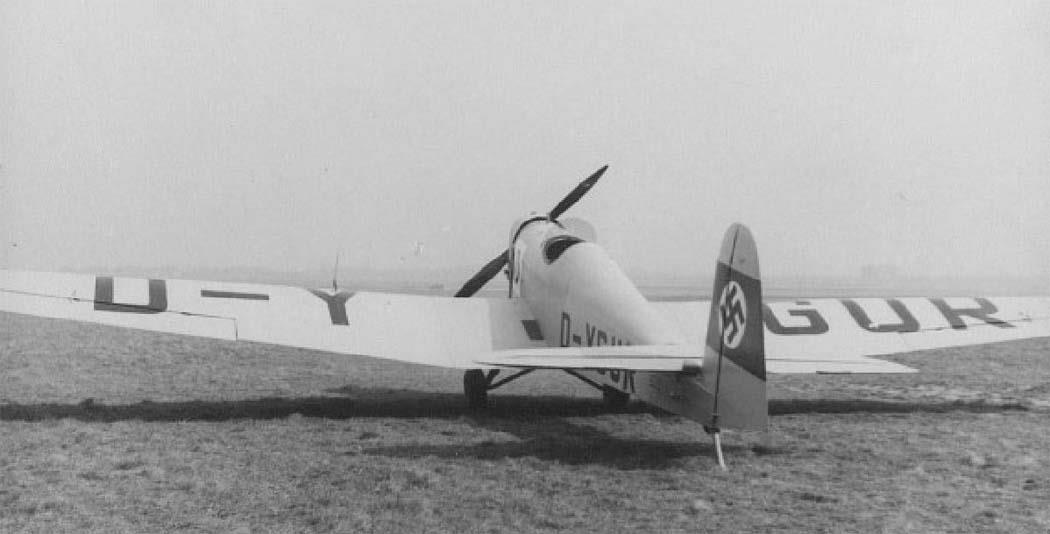
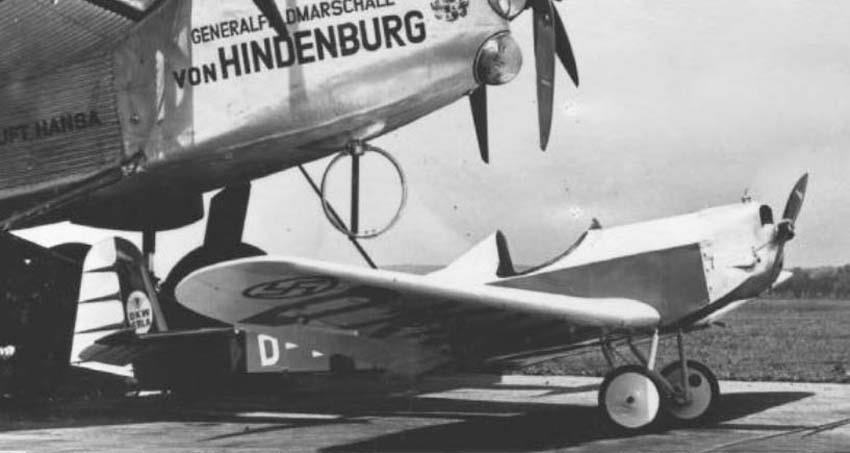
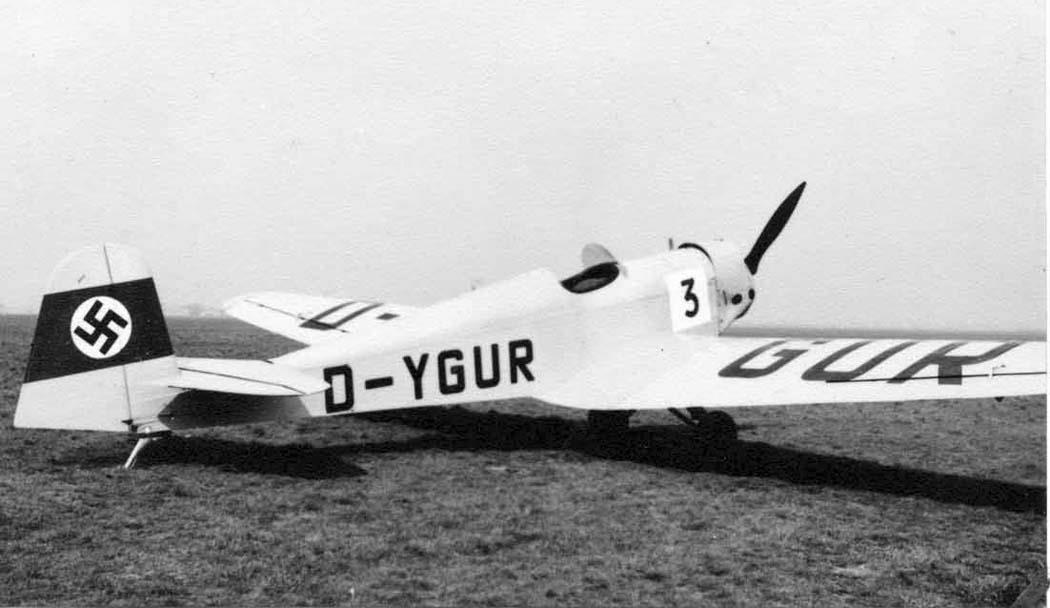
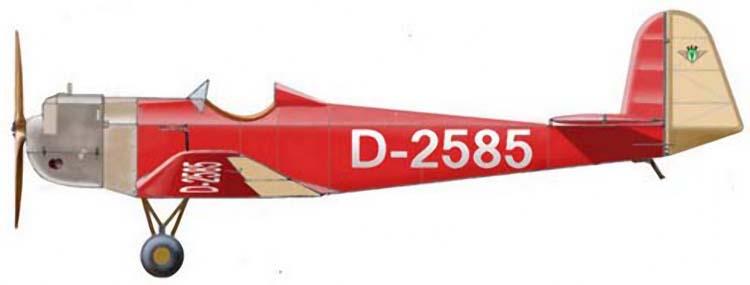
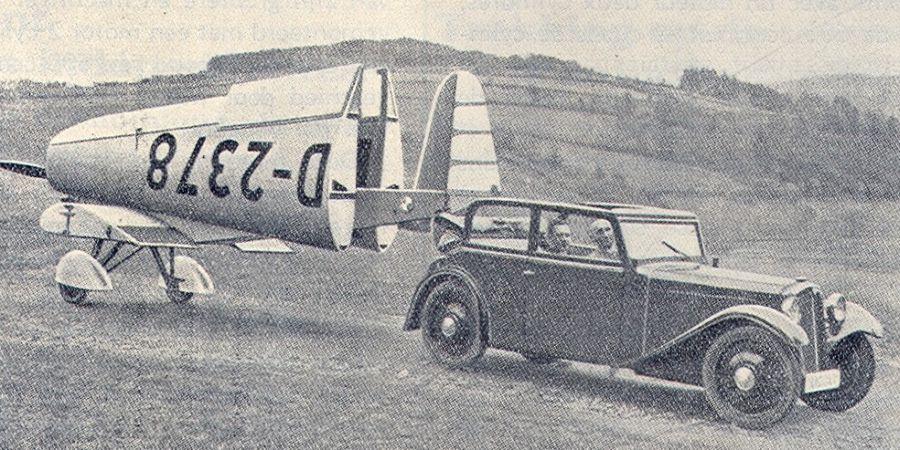
Die Arbeiten an dem von Franz Xaver Mehr entworfenen Flugzeug begannen in dessen als Flugzeugbau Friedrichshafen Mehr & von Rüdiger GmbH bezeichneten kleinen Unternehmen in Meckenbeuren im Winter 1931/1932 und wurden im März abgeschlossen. Als Antrieb diente ein von den DKW-Werken in Zschopau umgebauter Automotor von 1929, der von der DVL getestet und abgenommen wurde. Der Erstflug des anfangs als Friedrichshafen Me 5 bezeichneten Prototyps wurde von Alfons Lüber Mitte Juli 1932 vom Flugplatz Konstanz aus ohne Komplikationen durchgeführt. Auch die weiteren Flüge ergaben keine Probleme und so konnte die Erprobung am 16. August mit einem viereinhalbstündigen Dauerflug in 2000 m Höhe beendet werden. Auf der Suche nach einem Geldgeber für die geplante Produktion überführte Franz Xaver Mehr die Me 5 im Anschluss mit beigeklappten Tragflächen an ein Auto gehängt per Straßentransport nach Zschopau und flog sie dem Besitzer der dortigen DKW-Motorradwerke, Jørgen Skafte Rasmussen, vor. Rasmussen äußerte sich positiv und beschloss, die Serienfertigung im Eisenwerk Erla aufzunehmen. Die Materialbeschaffung begann noch 1932 und Anfang Mai 1933 wurde ein als Me 5 a bezeichnetes zweites Exemplar aufgelegt, das eine um 15 cm reduzierte Höhe und auf 120 km/h gesteigerte Höchstgeschwindigkeit aufwies. Dieses war als Musterflugzeug einer insgesamt elf Stück umfassenden Kleinserie vorgesehen und sollte deshalb auf dem „Großflugtag der NSDAP“ am 25. Juni 1933 in Dresden mit der Hoffnung auf nachfolgende Bauaufträge öffentlich vorgeflogen werden. Da aber die Zulassung bis zu diesem Zeitpunkt nicht erteilt wurde, musste auf den Prototyp zurückgegriffen werden. Der war inzwischen etwa Anfang 1933 als Erla Me 5 a zugelassen worden, hatte das Kennzeichen D–2378 erhalten,[2] und war im April 1934 wiederum per Straßentransport nach Erla überführt und dort für Präsentationsflüge mit einem DKW-Triebwerk von 20 PS ausgerüstet worden. Die Vorführung gestaltete sich aufgrund von Motorproblemen äußerst ungünstig und musste letztlich ganz abgebrochen werden. Auch die Erprobung und die Abnahme des zweiten Flugzeugs verzögerte sich unter anderem durch Probleme mit dem Antrieb. Es wurde schließlich im September 1933 als D–2585 registriert.[3] Inzwischen war im Juli der Bau der restlichen zehn Me 5 a angelaufen, aufgrund des Fehlens von Motoren aber nur schleppend, und auch der Absatz blieb hinter den Erwartungen zurück. Bis Ende 1938 aber waren alle elf Serienflugzeuge verkauft. Eines dieser Flugzeuge überstand den Zweiten Weltkrieg, flog in Deutschland von 1955 bis 1958 und gelangte anschließend in die Schweiz, wo es einen neuen Motor erhielt und damit im Oktober 1967 erstmals flog. Sie ist erhalten geblieben und im flugfähigen Zustand auf dem Flugplatz Birrfeld beheimatet.[4]
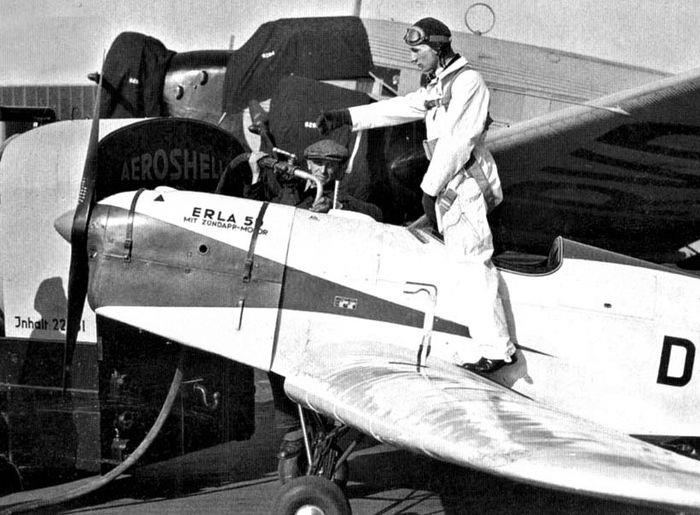
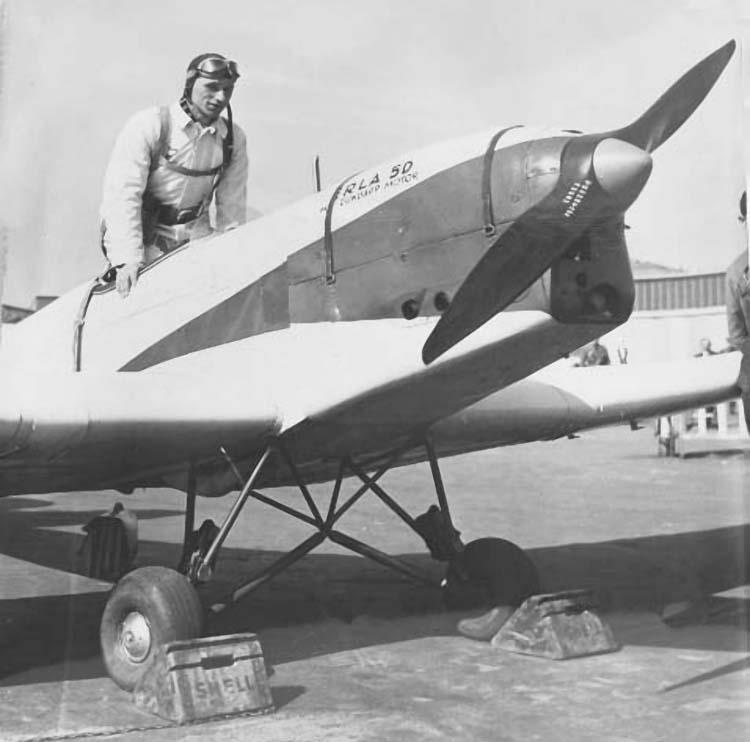
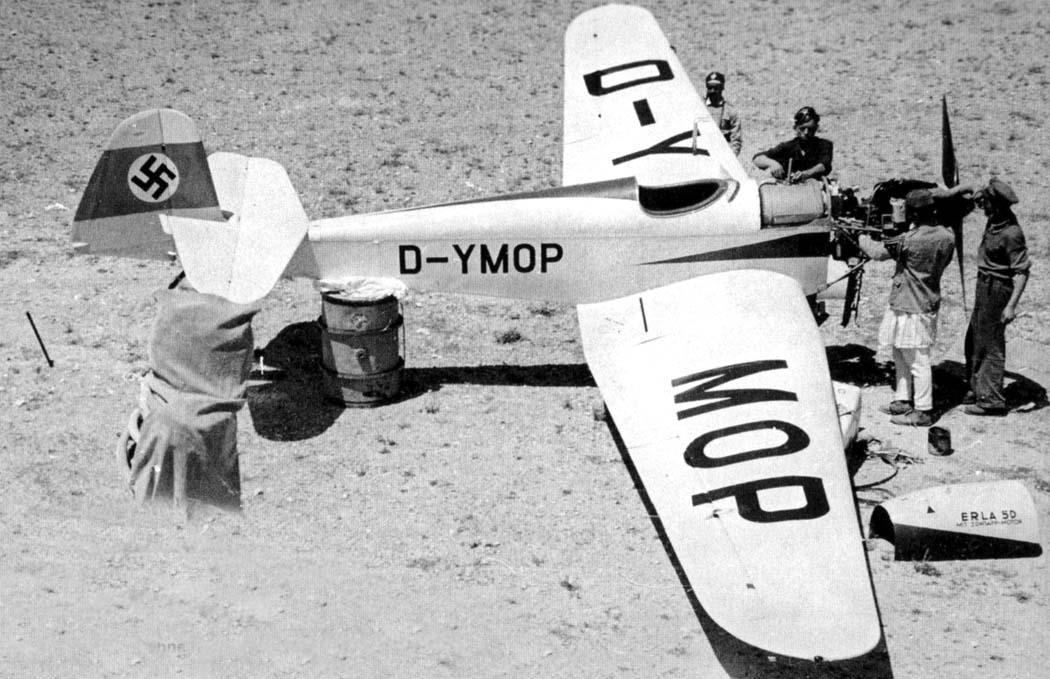
Ab 1937 entwickelte Franz Xaver Mehr als Reaktion auf eine Forderung des NSFK nach einem einsitzigen Schulflugzeug mit 50-PS-Triebwerk aus der Me 5 a die Erla 5D mit vergrößertem Seitenruder, geänderten Fahrwerk und Zündapp-Motor. Im Juni 1938 wurde der Prototyp vollendet und im Juli auf der Belgrader Luftfahrtmesse öffentlich ausgestellt, was aber keine Aufträge nach sich zog. Stattdessen absolvierte das als D–YMOP registrierte einzige Exemplar mit dem Piloten Friedrich Auermann vom 1. April bis zum 20. Mai 1939 einen Drei-Kontinente-Flug von Europa über Asien nach Afrika und zurück und legte dabei rund 20.000 km zurück. Dafür hatte es zusätzliche Tanks in Rumpf und Flügeln erhalten, die das Gesamtvolumen auf 140 l (101 kg) erhöhten und die Reichweite auf 1500 km steigerten.[5] Im Anschluss wurde es im Juni 1939 auf dem Aerosalon in Brüssel präsentiert, wiederum ohne Erfolg. Heinz Gabler stellte kurz darauf vom 2. zum 3. August 1939 mit der Erla 5D in ihrer Klasse einen Langstrecken-Weltrekord von 1915 km auf der Route Friedrichshafen–Vännäs auf. Das Flugzeug hatte für diesen Flug eine geschlossene Kabine erhalten. Anschließend wurde sie der Deutschen Luftfahrtsammlung in Berlin hinzugefügt, wo sich ihre Spur in den Wirren des Krieges verliert.
Aufbau
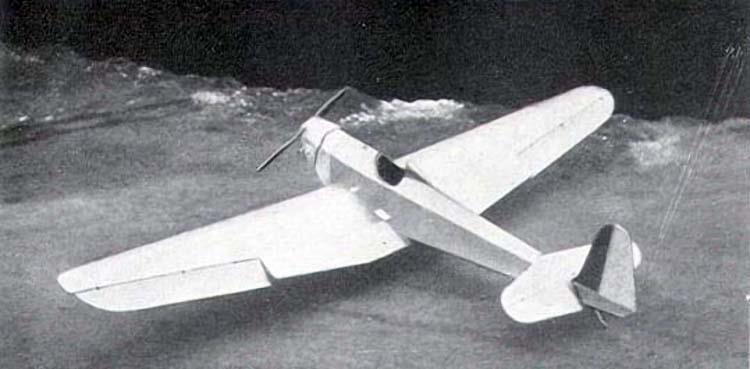
Die für den Transport per PKW abgerüstete Me 5
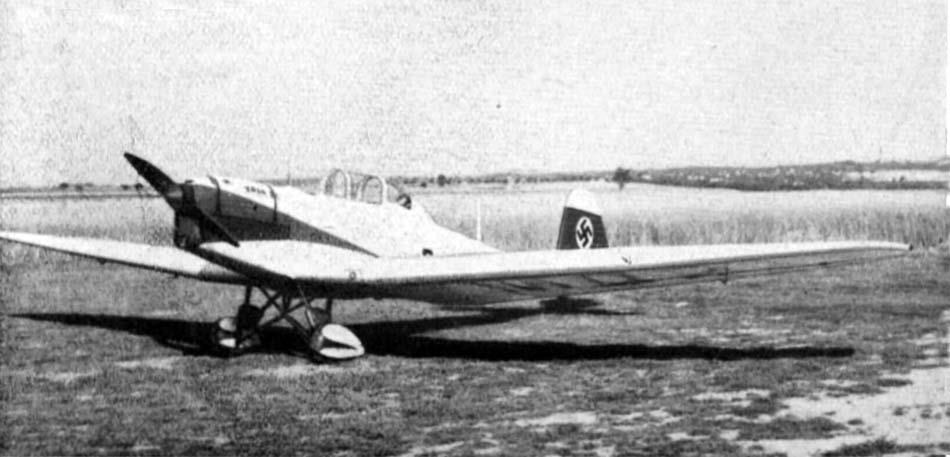
Die Erla 5 ist ein freitragender Tiefdecker in Ganzholzbauweise. Der Rumpf ebenso wie das Tragwerk mit 2,14° Pfeilung bestehen aus einer sperrholzbeplankten und teilweise mit Stoff bespannten Holzkonstruktion. Die Tragflächen sind an den Rumpf klappbar gestaltet, was es ermöglicht, das Flugzeug an einen PKW oder ein Motorrad angehängt auf der Straße zu befördern. Die Ruder des freitragenden Leitwerks sind stoffbespannt, Höhen- und Seitenflosse mit Sperrholz beplankt. Die Serienflugzeuge unterscheiden sich untereinander durch geringfügig geänderte Fahrwerke und haben im Gegensatz zum ersten Prototyp keine mit einer Achse verbundene Haupträder. Die Erla 5D verfügt über ein Hauptfahrwerk mit 1,25 m Spurbreite und 380 × 150 mm Niederdruckreifen, bei anderen Exemplaren finden auch Ballonreifen Verwendung.
Erla Masch inen werk G. m, b. H, ist mit zwei Originalflugzeugen vertreten, von denen das einsitzige
Schul- und Sportflugzeug Erla 5 D mit dem neuen, von Zündapp entwickelten Vierzylinder-Reihenmotor ausgerüstet ist.
Freitragendes Tiefdeckertrag werk in Holzbau. Ein 2 m breites Mittelstück, fest mit dem Rumpf verbunden, und zwei Ansatzflügel. Anschluß durch je 3 Bolzen. Ein
Haupt- und ein Hilfsholm aus Kieferngurten und Sperrholz Stegen. Querruder am Hilfsholm angelenkt, Sperrholzbeplankung am Außenflügel bis zum Vorderholm, am
Mittelstück bis zum Hinterholm.
Viereckiger Rumpf mit gewölbter Oberseite, 11 Spanten aus Fichte und Sperrholz. Abnehmbarer Motorvorbau aus Stahlblech. Hinter dem offenen Führersitz ein
Gepäckraum. Sperrholzbeplankung. Freitragendes Holzleitwerk, Höhenflosse vor dem Seitenleitwerk auf der Rumpf Oberseite gelagert.
Festes Fahrwerk mit Niederdruckbereifung (380 X 150 mm). Die an einer aus vier Stahlrohren aufgebauten Pyramide unter dem Rumpf angelenkten Achshälften sind in
einer V-Strebe geführt und mit Gummisträugen abgefedert.
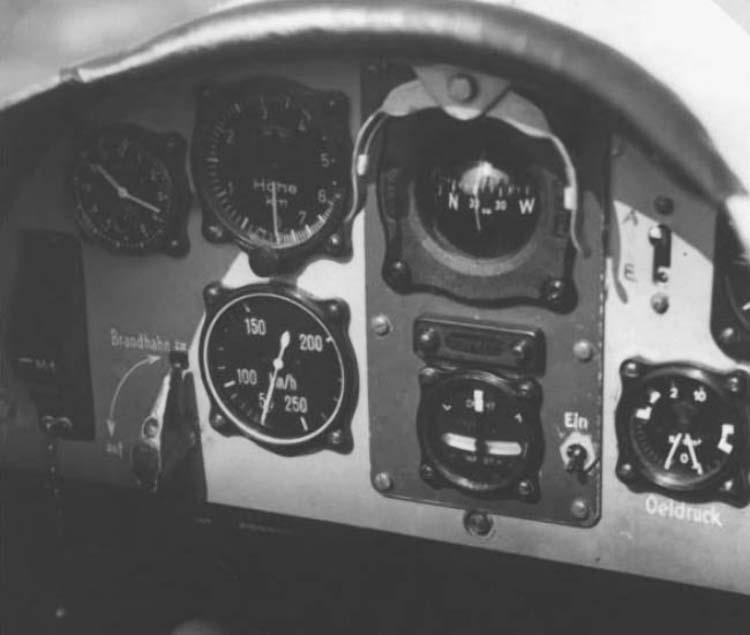
Triebwerk: Luftgekühlter Zündapp-Reihenmotor mit vier hängenden Zylindern. Dauerleistung 40 PS. Dreiteilige Verkleidung aus Elektron blech, Brennstoffb eh älter von 40
1 Inhalt unmittelbar hinter dem Brandschott, Förderung durch eine motorgetriebene DBU-Pumpe.
Spannweite lim, Länge 6,4 m, Fläche 13,7 m2, Leergewicht 240 kg, Fluggewicht 360 kg, Flächenbelastung 26,3 kg/PS, Leistungsbelastung bei 46 PS Höchstleistung
des Motors 7,8 kg/PS, Höchstgeschwindigkeit 154 km/h, Reisegeschw. 132 km/h, Landegeschw. 60 km/h, Steigzeit auf 1000 m 6,2 min, auf 2000 m 15,2 min,
praktische Gipfelhöhe 4700 m, Reichweite 400 km, Brennstoffverbrauch 101/100 km. Neben diesem aus dem früher mit dem wassergekühlten DKW-Motor
ausgerüsteten Muster Erla 5a entwickelten Tiefdecker gelangt noch der
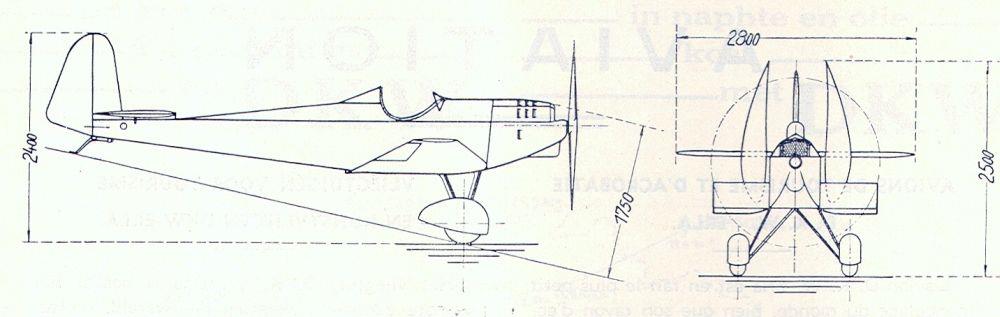
To prove the versatility of its intended as a "Volksflugzeuge" small aircraft, 1937 was installed in an Erla engine, the new water-cooled four-cylinder in-line type Zündapp Z9-092 with 2 liters and 50 hp starting power. The now called Erla Me 5D aircraft was extended to 6.80 m. The only machine was finished in June 1938 and was presented to the public for the first time with the registration number D-YMOP at the Belgrade Air Show one month later. On 1 April 1939, Erla factory pilot Friedrich (Fritz) Aufermann and D-YMOP started at the airport Berlin-Tempelhof for the "Europe-Africa-Asia-Europe-Flight" over three continents and came on 20 May for a distance of 20,000 Kilometers to the destination Leipzig. In class C, 4th category (up to 2 liters displacement), factory pilot Heinz Gabler set a new long-distance record on August 2, 1939, when he was with D-YMOP, which now had a closed cockpit, without a stopover from Friedrichshafen on Lake Constance over 1915 kilometers to Vännäs in Sweden flew.
The economic success remained, however, and so few Erla Me 5 were built as a school aircraft.